Home Blog Page 14

How To Hunt & Scout Deer In September (The Summer to Fall Shift)

How to scout and hunt deer in September can be difficult if you don’t understand a few key concepts about this timeframe. The transition from August into September causes a big shift in the whitetail world. Towards the beginning of September, bucks are starting to lose their velvet and testosterone levels start increasing. When this occurs bucks lose their tolerance for their buddies that they have been hanging out with all summer and start fighting each other to establish dominance. This behavior causes bucks to separate and claim their own core areas. This can make shooting big early-season bucks difficult.
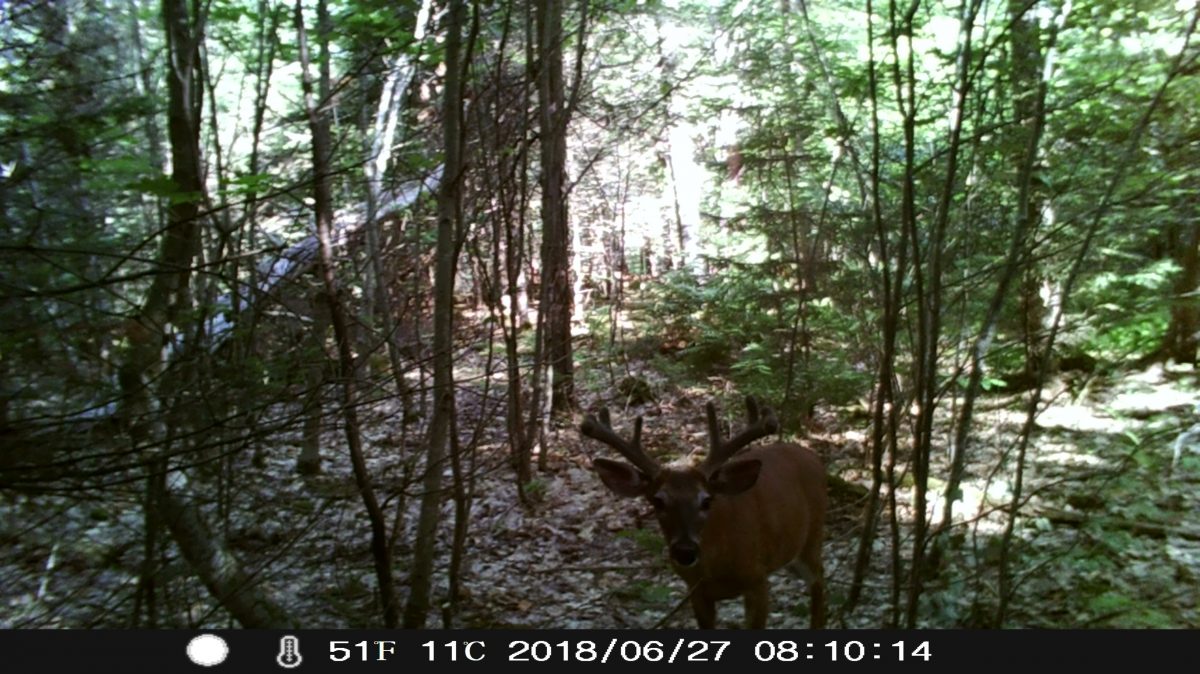
From numerous trail camera photos, I have noticed that starting anywhere between the beginning of September into the beginning of October bucks often stop traveling as they had been all summer. The timeframe for this movement is different at each location. Whitetails change patterns at different times at different locations depending on the resources available to them. The very first few days of hunting season can provide an excellent opportunity to kill a mature buck if he is still using his summer routine but just be aware patterns are changing quickly.
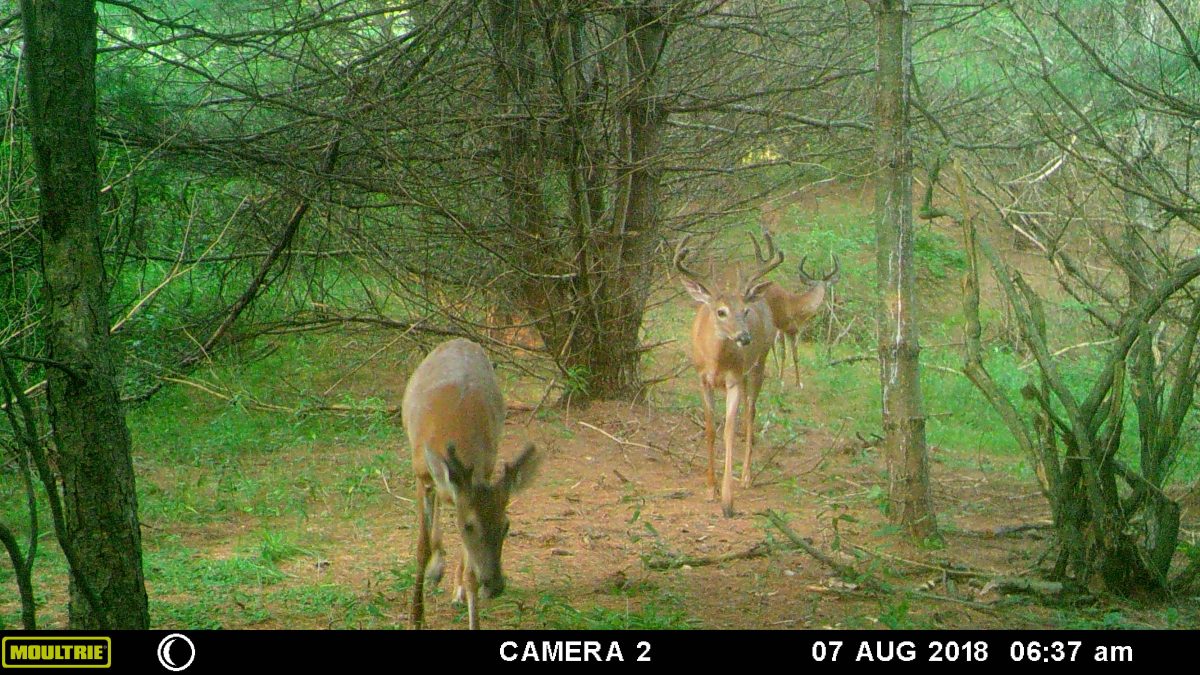
Summertime Bachelor Group of Bucks that will likely break up in the month of September.

Many archery seasons start around October 1st. I’ve noticed that many hunters set up their treestands based on where they are seeing bachelor groups in early September, this can be misleading. Often only one or two bucks in a bachelor group will remain in the area, sometimes none of them will remain and will move to a more adequate fall habitat with better early fall food sources like white oaks. Bucks separating and establishing in different areas just before the season starts often leaves hunters scratching their heads, wondering where the bucks they were observing all summer wandered off to.

Behaviors change quickly at this time of year and if you are unaware of the changes that are occurring you may be wasting your time hunting the wrong locations. If you don’t have any luck hunting where you had been observing bucks in the early summer it is probably time to transition and figure out what the deer are doing in their early fall patterns.

Early Season Food Sources
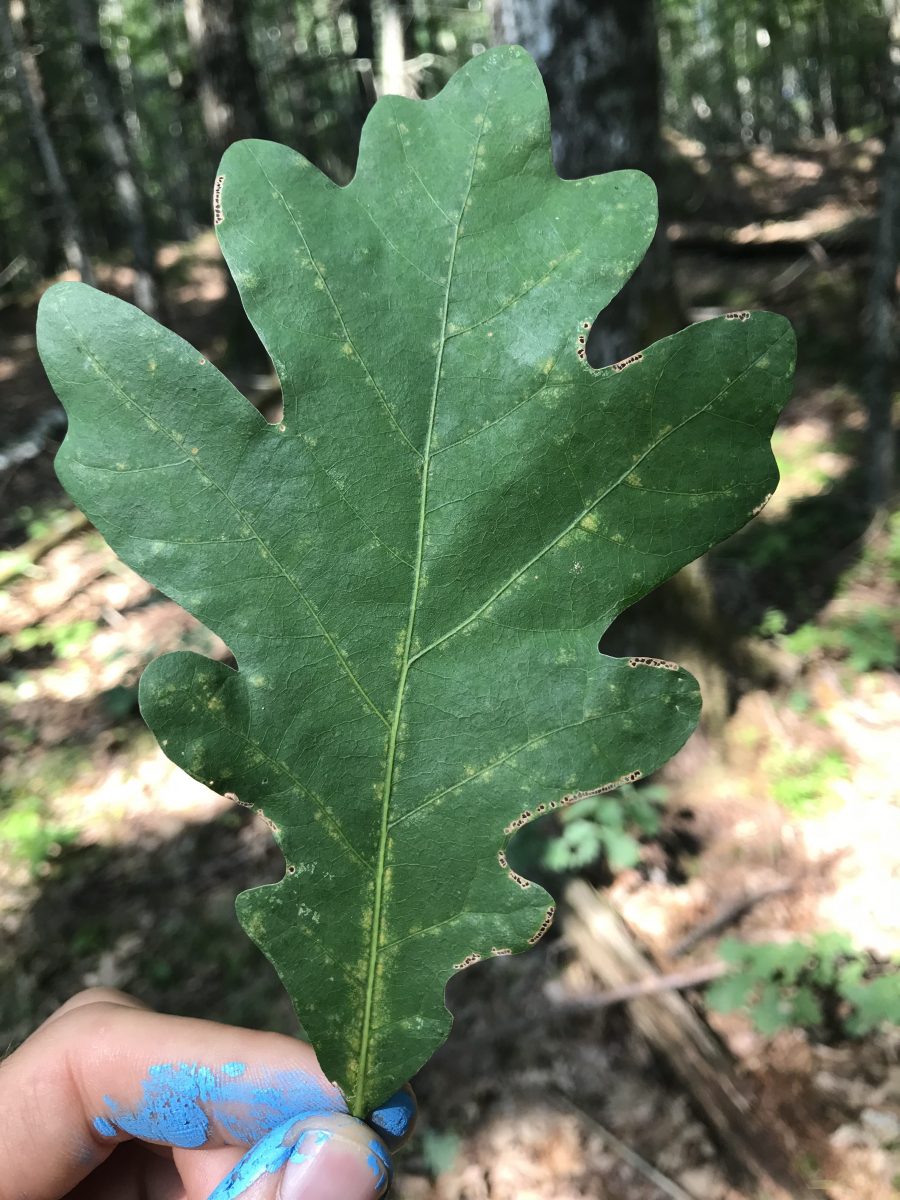
White oak leaf. Note the rounded lobes.

Food sources are important to keep track of during this time of year because there is going to be a shift in the type of food whitetails will be eating. When there is a shift in food sources there will be a shift in movement.

I believe white oaks are the most important food source to key in on in September because they are the first major food source to drop and likely will alter deer movement if you have them in your area. A gradient of white oaks occurs in my state of Maine. The gradient consists of higher populations of white oaks in the south which decreases as you move north. In fact, I’ve never seen a white oak in northern Maine.

Understanding this has helped me become a better hunter because I’ve learned to keep my eye out for white oaks throughout the year. If I find a stand of white oaks in an area where white oaks are rare I will keep that area in the back of my mind for future hunting opportunities. White oaks will drop their acorns before red oaks. They will drop in mid-September into early October. Whitetails key in hard on white oaks during this timeframe.

Late summer is a stressful time for whitetails because food quality has reduced, and vegetation isn’t as succulent as it was in early spring and summer. White oaks provide needed nutritional replenishment and a sought-after change in palate. If you can find a stand of white oaks in areas where generally low numbers of white oaks reside you may have stumbled upon an early season whitetail honey-hole. The shift from grasses, sedges, and rushes (forb phase) to the acorn phase during September will change how whitetails move along the landscape.

So how do you prepare for the change in food sources?

Hunting Early Season Bucks
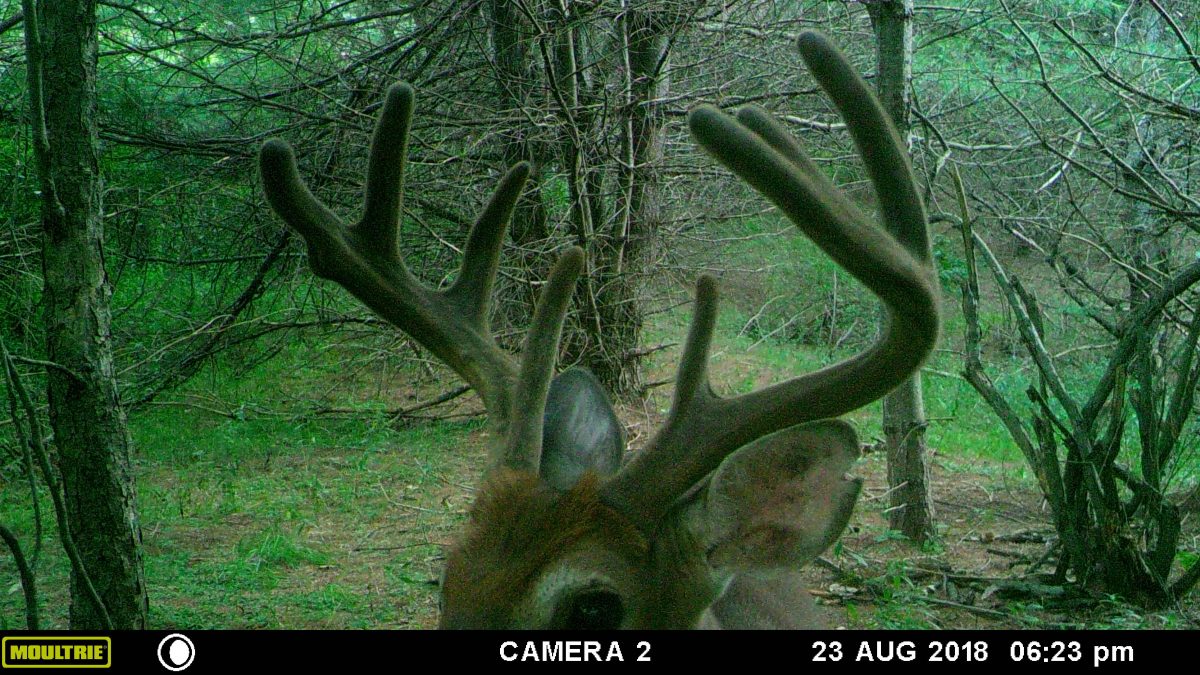
September marks the beginning of deer hunting season for me here in Maine. The expanded archery season starts at the beginning of the second week of the month. I personally struggle with this month and am always trying to figure out how to hunt this time of year. The reason why I struggle with hunting at this time of the year is that I haven’t been able to learn from making very many mistakes hunting early season. From past experiences, I have ruined spots by hunting them too early in the season. From these experiences, I have become cautious about hunting my best bucks early. That being said you can still kill mature bucks during the early season. What I have started to figure out is how important bedding areas are during the early season. The dilemma I run into is that hunting bedding areas are higher-risk hunts than hunting food sources.

Hunting Bedding Areas
I have found bucks naturally gravitate to high-quality bedding areas. Here is one example of a confirmed bedding area based on a hunch from aerial imagery.

It would make sense that if whitetails are keying in on white oaks you should hunt within shooting distance of a stand of white oaks right? Perhaps, but not necessarily. Bedding areas are where bucks spend most of their time during daylight. The closer you are to their bed when they decide to move the higher odds the deer will pass your stand in daylight. Sure you could hunt the food source but that gives the big buck you’re after more choices and time to meander around before he comes into the food source, often only revealing himself under the cover of darkness. Getting close to a bedding area in the early season can be risky, the trade-off being it can be a much higher reward.

Being able to identify the shift in whitetail movement during September has been difficult for me. Food sources, specifically individual mast/ apple trees that the deer gravitate to change from year to year and can be difficult to predict. To compensate for this I’ve started focusing on high-quality bedding areas. By focusing on these bedding areas I don’t have to worry so much about the change in food sources because often bucks will continue to use the same bedding areas if they are of high quality. With this in mind, it would make sense that hunting bedding areas would be more beneficial during the early season. The drawback is that it is a much higher risk. I could hunt inside bedding areas and get right on top of the bucks I’m after in the early season and probably have some success. However, this is extremely invasive, and mature bucks will catch on fast if I’m not successful the first time or two.

I have found that leaving bedding areas alone until the time is right during the pre-rut and rut phases puts the odds much greater in my favor. Doing this also allows bucks to feel safe because I am letting all deer in the area feel like they are in a sanctuary. For example, hunting pressure from other areas will drive deer into the areas that I have left alone because deer feel safe. This false sense of security actually can greatly increase the number of bucks in a given area. Mature bucks are smart and are very sensitive to hunting pressure and will move away from the pressure they are feeling. So where do they move to? They move the sanctuary that I created. This means bucks from great distances may move into the false sanctuary I’ve given them. Then when the pre-rut rolls around I now have a pocket of bucks within my “sanctuary” and they will be up and about looking for does at this time. That’s when I go in for the kill. This game plan has worked better than any other.

Hunting Food Sources

Hunting food sources on the other hand is less invasive. If a buck catches onto you at a food source he will likely stop using that food source until after dark. However, if you know where he is bedding he will likely remain bedding in that area. You may still have a shot at this buck during the pre-rut and rut if you set up close to his bedding area during that timeframe.

On the other hand, if a buck catches onto you hunting near his bedding areas in the early season he may likely stop using that bedding area. When a buck stops using a bedding area and relocates he becomes much harder to kill in my opinion. He may have relocated a mile away or more dwindling your chances at seeing him again.

So you might be asking…so do I hunt bedding or feeding areas? The best way to answer this is that there are no one-size-fits-all all scenario when whitetail hunting. You’ll have to consider what makes sense in your situation. The best I can do I share with you my personal experiences and let you decide. If a buck is showing up almost every day at one food source right before the hunting season in daylight it would probably make sense to hunt the food source. If I was constantly getting trail camera pictures of a big buck in daylight just on the outside of a bedding area, I would try one or two hunts up against that bedding area. If unsuccessful I would let that buck “cool down” to my disturbance and wait until the pre-rut before I hunt that buck again.

Trail Cameras

Starting around the beginning of September I will move some trail cameras to areas that I have previously determined to be fall whitetail habitat. I have determined this by using trail cameras in the past and visual observations. An area that gets very little movement during the summer months, but as food sources change and bucks separate I tend to get many more pictures in these areas. Doing this has helped me find early-season bucks to hunt. By catching bucks switching from summer routines into fall patterns I am more effectively able to capitalize on changing patterns.
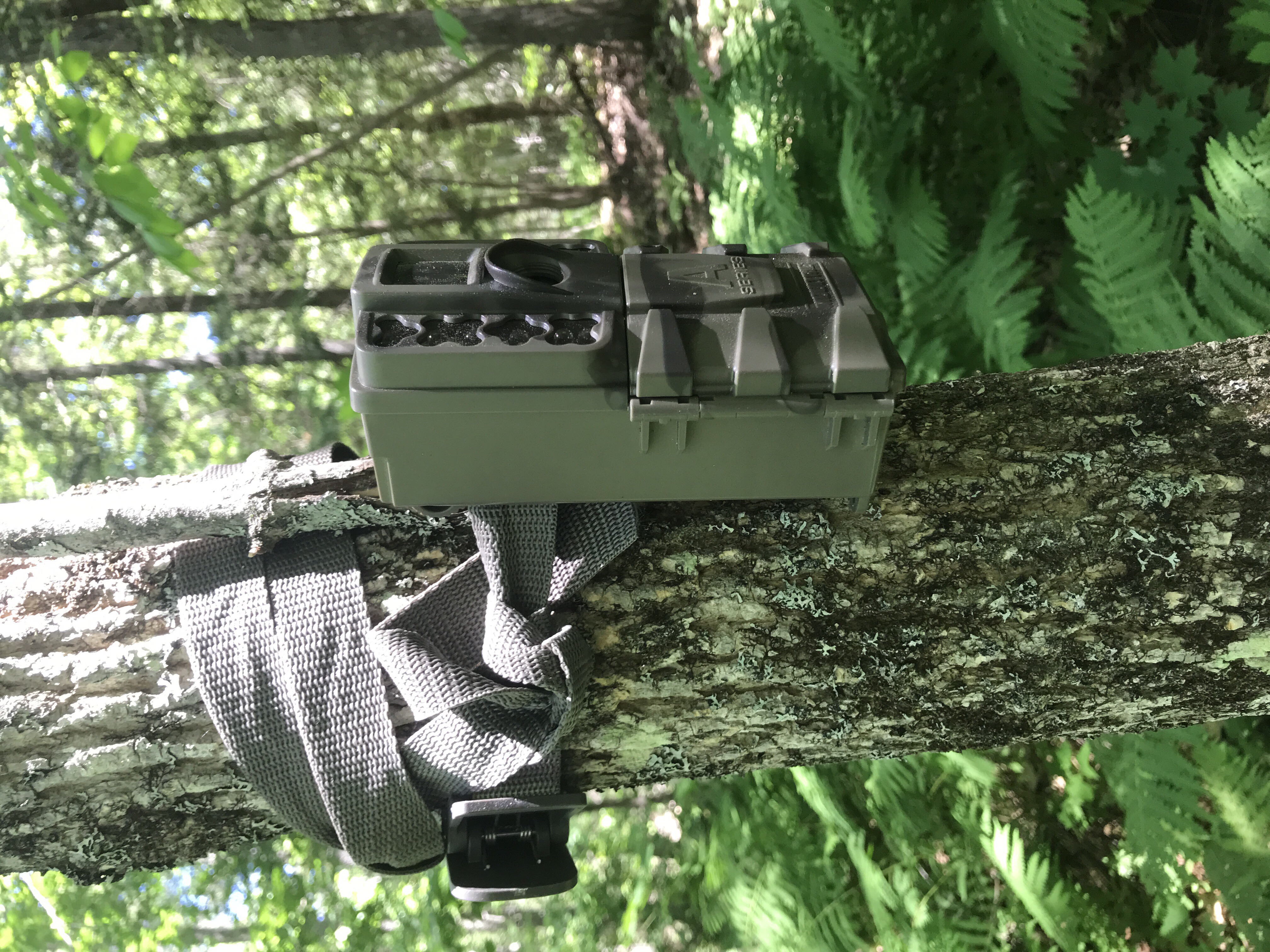
Trail camera pictures of big bucks from previous years also provide valuable intel. Whitetails are very habitual creates and tend to do have the same patterns year after year at specific times of year. For example, if you had a big buck show up on cameras on October 15th last year for a few days there is a fair chance that this buck will be back very close to this date the following year. From setting up cameras in the same areas year after year I have seen this pattern. Sometimes right up to the hour! Using old trail camera photos to predict when a big buck may show up in a particular area is a surprisingly accurate way to determine when to hunt particular stands.

Unless past or current trail camera pictures are giving me a reason to hunt early season I will generally stay away from hunting my best rut sign spots until the pre-rut and rut. Usually, a couple of trail cameras every year provide reasonable enough intel to permit a few worthwhile sits in the early season but I am careful not to overdo it.

Season Prep

By the beginning of September and hopefully sooner I like to have my broadheads sighted in, my form down to a science, and my confidence high going into the season.

I also wash clothes in scent killer and let them dry outside, then store in a plastic tote. This tote remains in my car during hunting season. I make sure to wash EVERYTHING I hunt with. I am an absolute minimalist when it comes to gear. More gear being brought into the woods increases the likelihood of contamination with an unnatural smell to whitetails. I never bring a wallet with me as the leather scent is very strong. I highly recommend leaving your wallet in your car. I usually don’t bring binoculars or a backpack either. My usual gear consists of Lonewolf climbing sticks, New Tribe Aero Hunter tree saddle, bow, arrows, rubber boots, release, Scent Lok suit, headlamp, tree steps for my platform, string to pull my bow up, and a bow hanger. All of which get treated with scent killer in one way or another. Everything I can fit goes into my Scent Lok suit pockets when not in use.

Questions & Community

If you have more questions about GumLeaf boots or questions in general you can ask them on Facebook. You may also find answers to your questions on my YouTube Channel.

How To Scout Deer In August | Understanding Summer Deer Patterns

In this post, you’ll learn how to scout deer in August. In August deer are still in their summer patterns and bucks are still carrying their velvet. There isn’t much change from July to August in the deer world. By the end of the month, their velvet will be very close to what their hardened fall antlers will look like.

Be sure to check out How to Scout Deer in July if you missed last month’s post!

Food Sources

One change I notice each year during August is that deer change feeding patterns. I’ve consistently observed deer hitting a particular field or food source in early July only to have them disappear from that food source in August. I later learned that starting around late July into early August vegetation loses much of its nutritional value. Whitetails will often change food sources to locate higher-quality food. August is one of two main food stress periods for whitetails and continues until mast starts dropping in early fall.

Don’t be surprised to see the big buck you see all summer disappear from a particular field or food source. Likely, he is still nearby using a different food source, the key is to locate high-quality bedding nearby.

Wetlands

Whitetails in August are trying to conserve as much energy as possible. When temperatures are hot they seek the shade, water, and wind to ease their burdens. Wetlands that produce high-quality bedding opportunities are my absolute favorite spots to hunt and scout.

If wetlands do not provide high-quality bedding into the fall then the deer will likely move to a fall range. However, if the bedding in the wetlands is thick and secluded throughout the year there’s a good chance it’s a big buck hotspot.

During summer months deer are often found bedding in wetlands to keep cool from the brutal heat. Whitetails seek cooler moist soils found in wetlands to help lower their body temperature which reduces energy expenditure.

A few of my favorite wetland vegetation species for whitetails include; dogwoods, cattails, speckled alder, winterberry, and switchgrass. Wetlands comprised of these species create hard to get to, thick, dense, nasty cover. Bucks feel comfortable in areas like this and will move more during daylight hours during the hunting season. Bucks will generally leave more rut sign in these areas. Many of my best hunting stands are located in wetlands where I’ve observed mature buck sign during previous scouting missions.

Even when leaves drop in the fall wetlands can still provide adequate cover. Since bucks are looking for security over all other factors in pressured settings, wetlands offer prime opportunities for high-quality bedding.

In my experience bucks bedding in high-quality bedding areas located within a wetland often remain in that wetland into fall as long as there are pockets of dry higher ground for bedding. This keeps bucks off of wetter soils during the cooler months. Wetlands are my favorite type of habitat to hunt bucks because of this.

I’ve been able to pattern bucks better in wetland scenarios like this better than any other habitat. Trail cameras in wetlands have confirmed bucks use these areas from summer into the fall year after year.

A cattail swamp like this a classic example of a high-quality buck bedding area. Bucks will often bed at the edges of islands in moist soil during summer then transition to dry hummocks in the fall.

Treestands

I believe there is no single tool more valuable than having a plethora of stands to choose from for all types of weather conditions during the different phases of the hunting season. More scouting equals more spots to hunt during the upcoming hunting season. Overhunting stands leads to unsuccessful hunting seasons for most hunters trying to kill big bucks. My best tip for scouting deer in August is to get as many treestands areas with good buck sign. This way you have a good rotation for the fall.

Increasing the number of stands locations reduces pressure per stand and enables me to spread out pressure out among these stands. When preparing treestands during this time of year it is important to do it as non-invasively as possible to not disturb doe family groups or specific bucks.  I prepare my stands to take advantage of as many wind directions as I logically can. This way I have opportunities to hunt an area more often. I’ve frustrated myself in the past by not placing enough stands for certain wind directions. This greatly reduced the time I was able to hunt and my success.

Treestands used during prevailing winds can be over-hunted quickly which will burn those stands for the rest of the season. This reduces the chances of harvesting a big buck. Keep this in mind when setting up treestands during this time of year. Setting additional stands up for the prevailing winds will likely be very beneficial for the upcoming season. 

During scouting missions in August, you may be tempted to place treestands over heavily used trails. This is more often than not a mistake. Patterns will change a lot from now until the hunting season starts. I used to make this mistake a lot early on in my hunting career. When I started setting up specifically on rut sign (even in the summer) my success increased dramatically. The images below show one example of big rubs I discovered during a summer scouting mission in 2017. When I set my trail camera up I captured the buck who made these rubs in the fall.

Although I do most of my scouting in spring I have found great hunting spots in August. No matter what time of year I am scouting I focus my efforts on finding big buck rut sign in the shape of big rubs and scrapes and their proximity to a high-quality bedding area. I refrain from going into bedding areas to keep stress levels at a minimum. 

If the property has good buck sign I’ll prepare a tree that day. Accomplishing everything in one day keeps stress levels at a minimum.  Repeated invasions from entering an area multiple times to set up a stand will likely increase deer stress levels. This could cause deer to change patterns. Keeping invasions to a minimum is a must.

Trail Cameras

I placed my trail cameras out around the 4th of July, I will start checking my trail cameras at the beginning of August. This is an exciting time because this will be my first true trail camera check with antlers close to their peak. From these photos, I will determine my hitlist for the season.

Creating A Hitlist

Creating a hitlist has a lot of value to me. I can tell what caliber bucks are living in a particular area. Determining the caliber of bucks before hunting makes decision-making while hunting much easier on whether to pass or shoot a buck. In a hunting situation, I will quickly be able to judge if the buck is a shooter or not because I have already decided from photos during August. This will help reduce the odds of pulling the trigger on a buck that is not what I am looking for and gives me confidence more in the field. Below you can see my hitlist for 2017.

Conclusion

My pre-season regimen for August is very similar to that of July. Deer are often in the same in August as they were in July but could be hitting a different local food source. By August I like to have my bow tuning gear, and projects wrapped up, and be shooting confidently and feeling ready for the season. I am still glassing and shining fields in hopes of locating a mature buck feeding so I can try to puzzle together where he’s feeding.

Whitetails, especially bucks, drastically change their patterns in September. Deer summer patterns start to diminish and fall patterns emerge. I hope you found this post on how to scout deer in August to be helpful. Stay ahead of the game by reading How to Scout & Hunt Deer in September | The September Fall Shift.

Happy Scouting.

Aero Hunter Tree Saddle Review: A New Tribe Tree Saddle For Hunting

This Aero Hunter review covers the benefits of the Aero Hunter vs conventional treestands. I made the switch and I haven’t looked back. I’ve spent countless hours in saddles while deer hunting, this post will cover everything you need to know to determine if the Aero Hunter tree saddle by New Tribe is the right saddle for you.

UPDATE: I created this post in 2018 when this was the only saddle available on the market. The saddle market has exploded since then and significant improvements to saddles have taken place, especially in regards to comfort. I would not recommend this saddle anymore. Instead, check out some of the newer saddles on the market that I have reviewed:

The other 4 saddles I reviewed included:

Aero Hunter Saddle Setup by New Tribe

Aero Hunter Saddle System Breakdown

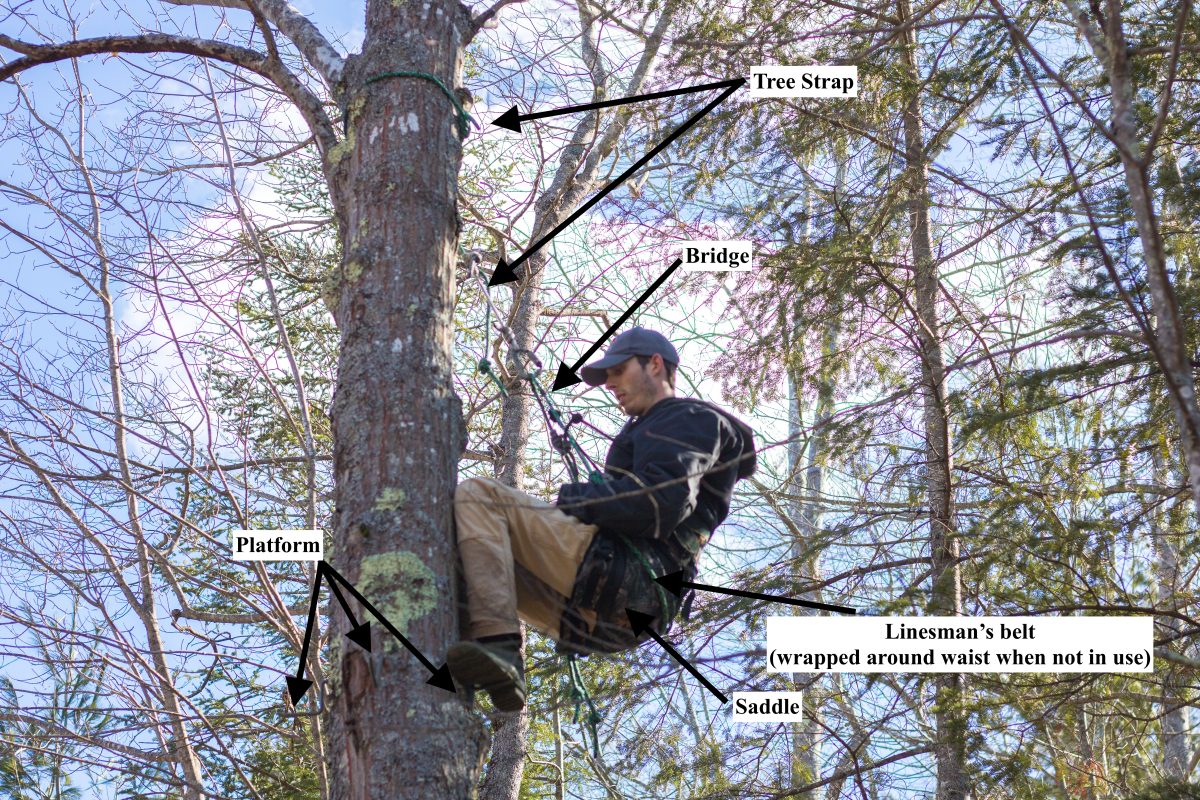
The Aero Hunter saddle is made with high strength fabric and rope with two carabiners. The Aero Hunter package consists of a tree rope that goes around your tree of choice, a bridge rope that attaches to this tree rope, a lineman’s belt, and of course the saddle itself (see picture below). I have the older model of the Aero Hunter which is very similar to the new model, however, mine did not come with the back band.

Aero Hunter Saddle Setup by New Tribe
Overview of the Aero Hunter System.

How To Climb & Setup With The Aero Hunter Saddle

Aero Hunter Review | Why The Aero Hunter Is A Must

If you are a serious big buck hunter the Aero Hunter is a must to have in your arsenal, here are 11 reasons why:

You Can Climb Imperfect Trees

With this system, I am able to get around trees that are full of branches without ever having to completely detach myself from the tree. This allows me to climb ugly trees full of branches during run and gun setups that are in the right spot, rather than having to settle for another tree further from where the action is. Also, I can hunt trees that are leaning. With a higher selection of trees available I have been able to put myself in better positions making my hunts more successful.

You Can Climb Trees Of Almost Any Size

The Aero Hunter allows me to climb trees of any size that will support my weight. I have found this to be important in swamps where vegetation is stunted. The ability to hunt smaller trees gives me the ability to hunt where other hunters cannot. I can also hunt trees as large as the linesman and tree rope will reach. I shot my 2017 buck in a white pine that was around 30” in diameter. If you need to hunt larger trees you can purchase your own ropes to meet your needs, but the standard Aero Hunter ropes have been more than enough for all the trees I’ve hunted in.

The Aero Hunter Is Much More Cost-Effective

Once you buy the Aero Hunter you will not have to buy another treestand making it very cost-effective. It replaces the reason for buying multiple permanent ladder or hang-on stands which adds up quickly. This is how I think about cost-effectiveness: One Aero Hunter = infinite treestands. Five hang-on or ladder stands = five treestands.

You Can Have Multiple Stands

I have personally noticed and most successful big buck killers agree that hunting the same treestand repeatedly will quickly burn out spots and that the first couple sits are the most effective. This makes permanent ladder and hang-on stands easy to over-hunt and for big bucks to pattern you. I recommend only hunting stands when conditions are perfect for that particular treestand. This will increase success of particular treestands by keeping them fresh. Hunting only when conditions are perfect, however, greatly reduces the time you are able to hunt.

If you’re like me you’re going to hunt every chance you get one way or another, so being restricted like this was not going to cut it for me. I needed a better option. To increase my success I needed to be able to spread out my hunting pressure within multiple high-odd locations and hunt them when conditions were right in order to keep my stands fresh.

With the Aero Hunter I am able to hunt any location because the saddle comes home with me after every hunt. It is simple and easy to set-up so I can avoid hunting the same trees over and over keeping them fresh, making each hunt essentially the “first sit”, keeping big bucks from patterning me.

Maneuverability Is Unmatched

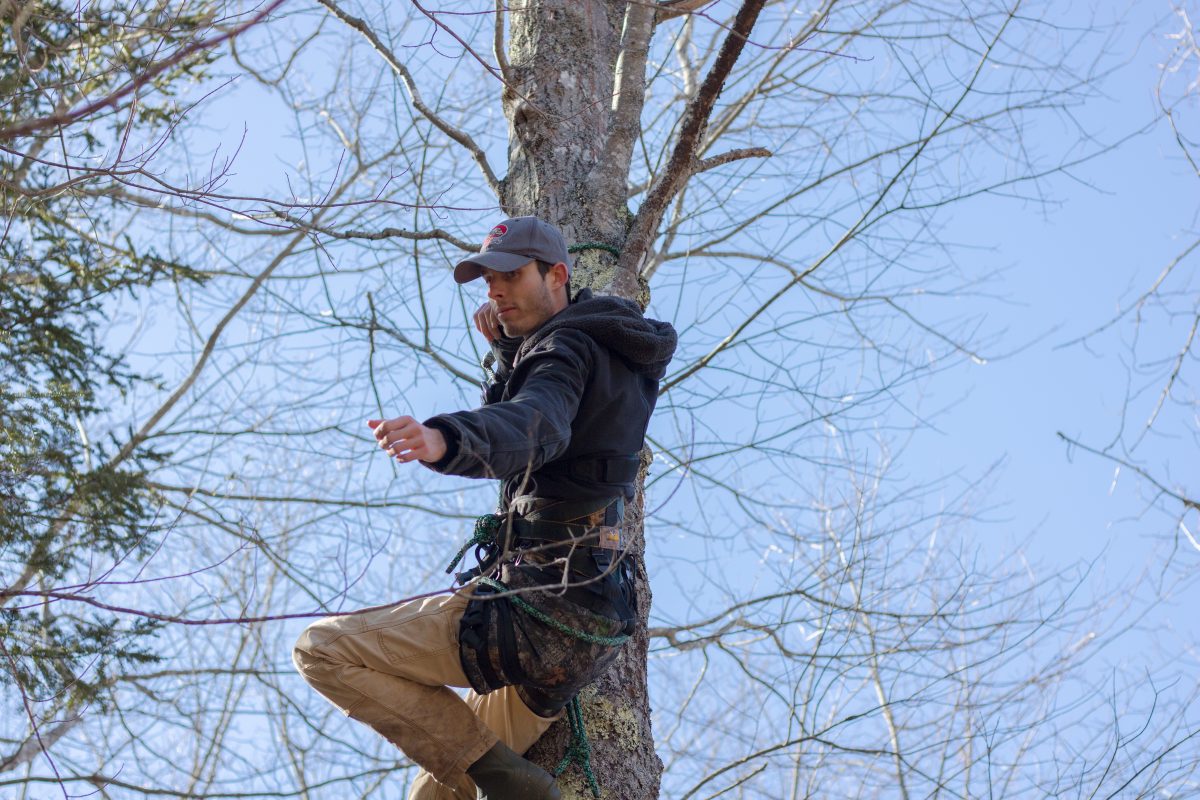
My Ameristep Tree Step platform placed around the diameter of the tree enables me to shoot a full 360º around the tree as well as directly underneath. Big bucks often don’t come in where you expect. Other treestands don’t offer this type of maneuverability, being able to maneuver like this puts me in control so I can take a good shots when they are presented. I can also change my vertical height slightly if I need to shoot just above or below a branch. By fully extending my legs from my platform it raises my elevation a few inches. Scrunching up close to the tree lowers my elevation.

Aero Hunter Saddle Maneuverability - New Tribe
My Ameristep Tree Step platform placed around the diameter of the tree enables me to shoot a full 360º and directly underneath.

The Aero Hunter is Quiet

There is very little metal on the Aero Hunter, everything else is rope and fabric. The carabiners are the largest pieces of metal. Some small strap adjusters are made of metal as well. Out of the box the saddle is pretty quiet, much quieter than conventional treestands that are made entirely of metal. To make my saddle silent I added some tape to all of the metal pieces and that did the trick. I feel much more confident in my approach when setting up in bedding areas with the Aero Hunter.

The Aero Hunter is Very Mobile

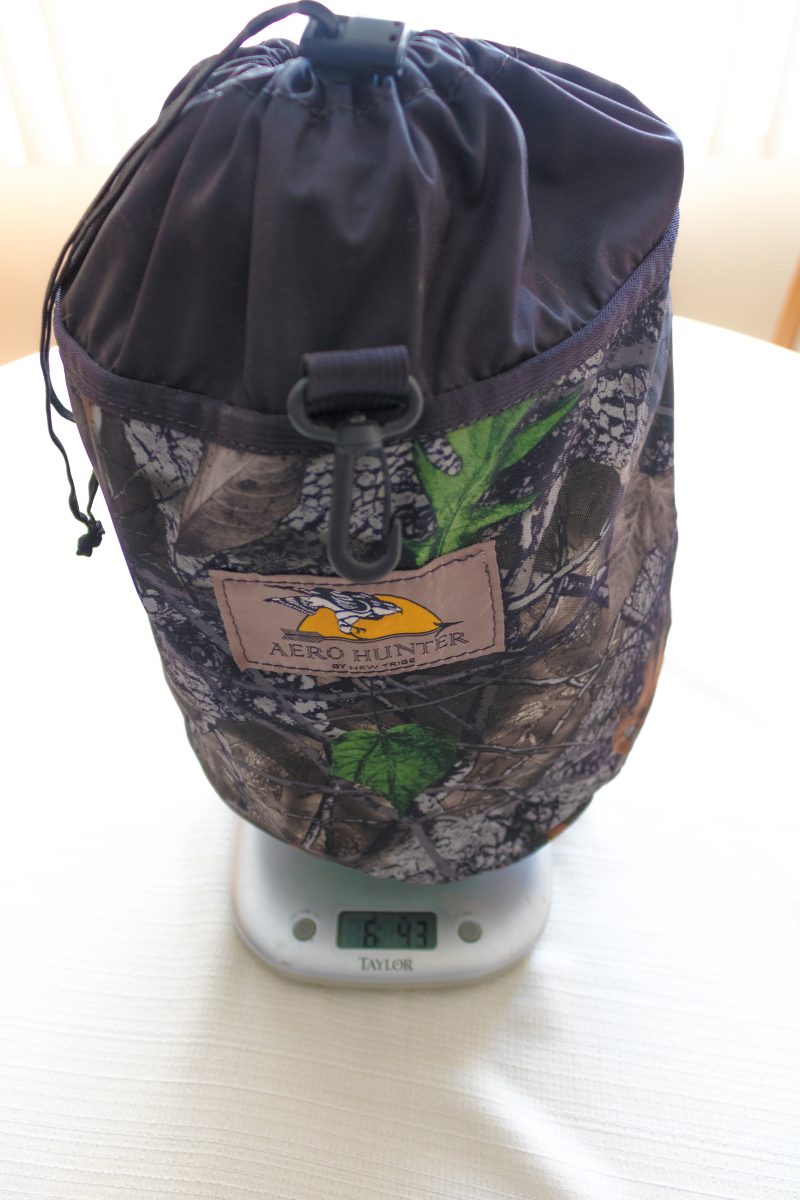
It only weighs 5 lbs 5oz making it incredibility lightweight.  Additionally, it is fabric so it can easily be rolled up into a small bag and placed into a backpack. It can also be worn to the treestand which is what I prefer, I drape the ropes over my shoulders when walking to my stand making transportation simple and noise free.

Aero Hunter Saddle Setup by New Tribe is lightweight
This is how much my Aero Hunter weighs in-bag, with a homemade back-band, and applied silencing applications.

It’s Easy To Conceal

Another great benefit of this system is it enables me to use the tree I’m in to my advantage. If animals are coming from a certain direction I can move to the opposite side of the tree to stay hidden. Since you are facing the tree you can straddle yourself right up tight against the tree. Another perk is that since you do not have to cut limbs down to get to where you want to hunt on a tree you can leave some natural cover to blend in better.

Is The Aero Hunter Comfortable?

The Aero Hunter is quite comfortable. Even when in awkward leaning trees the saddle remains fairly comfortable. Adjustable straps located on the back and leg portions of the saddle allow for customized pressure point relief. My Aero Hunter did not come with a back band as I mentioned previously, however, I created my own by using a neoprene firearm sling.

The back band is fantastic for long sits in the tree as your back does tend to get tired over time without one. I have sat in the stand for around 12 hours a couple of times and I do start to ache, but I am able to extend my legs, stretch, maneuver, and change position to lessen the burden. Sitting anywhere for 12 hours would make anyone squirm. I have not been able to sit as long in other conventional treestands.

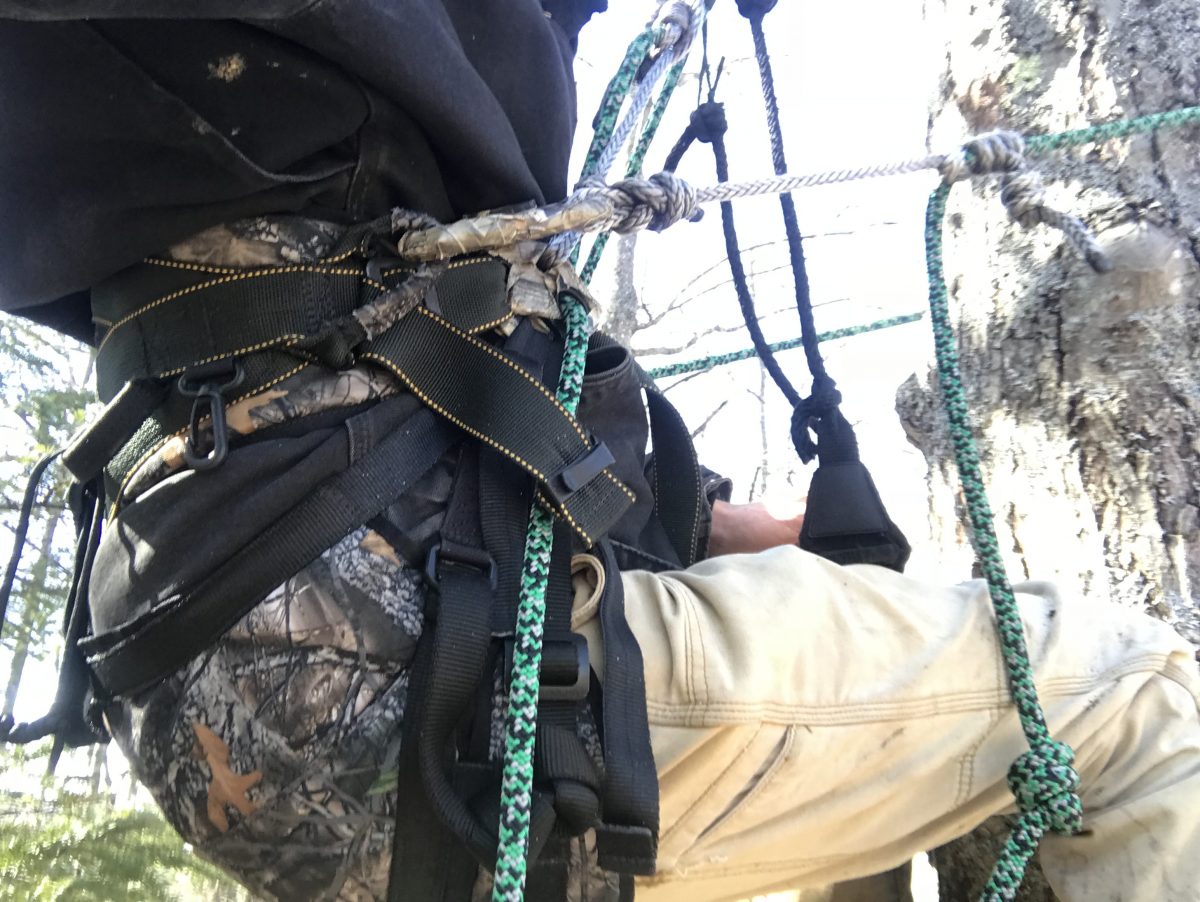
Aero Hunter Saddle Setup by New Tribe is highly adjustable
Here you can see buckles and prusik knots which can be adjusted to fit individuals nicely. The saddle forms well with my body for comfortable long sits on stand.

Can The Aero Hunter Be Stolen?

Theft can be a problem on public lands, and even on private land! The piece of mind of being able to bring the Aero Hunter home at the end of the day is huge for me. There’s nothing worse than getting excited about going hunting only to find your stand missing. Or going to check game cameras with months of data on them to find them stolen. With the Aero Hunter this is not a problem. Additionally, not having a bulky ladder or hang-on stand permanently placed on a tree prevents treestand locations from being discovered by other hunters.

Is The Aero Hunter Safe?

In my opinion the Aero Hunter is just as safe, if not more safe than traditional treestands. It has been designed specifically for fall prevention and is rated for 5000 lbs.

When used properly you are harnessed to the tree throughout the entire climb. When ascending the tree you are harnessed in with the lineman’s belt. Once you get to the height at which you will be hunting you’ll need to also use the lineman’s belt to place the tree rope. The lineman’s belt allows for a quick, painless and safe installation of the tree rope. Once the tree rope is secure to the tree you can attach yourself to it via carbineer. Once attached, the lineman’s belt can be removed. To descend the tree reverse the process. It is quite simple.

If you encounter tree limbs that your lineman’s belt cannot get around you can set up the tree saddle as you would to hunt, as I just mentioned, then remove your lineman’s belt and re-attach the belt above the limb and carry on your way up the tree, thus being attached to the tree 100% of the time.  A second lineman’s belt could also be added to climb branched trees even quicker.

I’ve often found myself getting lazy and not wearing, or forgetting to bring a safety harness when using conventional ladder and hang on stands. The Aero Hunter does not give you a choice. To climb the tree fast and effectively you must be harnessed in at all times.

Aero Hunter Considerations

The Aero Hunter is a fantastic system but there are some things to consider before you purchase:

1.     Video.

I have never done any videotaping while hunting, but it is something I am definitely considering in the near future. I am not sure how difficult videotaping would be but I imagine the footage would be a little shaky while being semi-suspended from the tree.

2.     Weight.

A person’s size may also affect their ability to stay in a Aero Hunter for long periods of time. I am a skinny dude 6’4 and 155lbs and it works great for me. Larger hunters may find it causes more strain at pressure points.

3.     Practice.

It takes a little bit of practice to use the Aero Hunter. For me it felt a little awkward at first with the bridge rope getting in the way of pulling my bow back. Switching sides of the tree to shoot can be difficult because you have to get a bow, with a knocked arrow around the bridge. Target practicing in different scenarios while in the Aero Hunter helped me figure out how to make shots count in the most awkward of situations. I highly recommend practicing tough scenarios.

4.     Knee Pads.

Personally, I don’t use knee pads when hunting with the Aero Hunter, but many people do. For long sits I may start wearing them. The reason being is as your knees press against the trunk of the tree for long periods of time they get sore, especially if the bark is ridged. Also, over time, I could see the bark wearing holes in the cloth of your pants at the knees, knee pads would be a good solution for this. I alternate between straddling the tree trunk and using my knees in order to keep my knees from getting too sore.

5.     Smell.

Out of the box the fabric and rope have a chemical-like, factory-processed type smell. It is not a bad smell, but to a whitetail it is strong and not natural. I spent a lot of time trying to get rid of the smell of the Aero Hunter system with little luck during the first year of use. I tried soaking everything in warm water and baking soda, I also let it soak in scent killer laundry detergent which helps a little, but not much.

What I observed was the excess coloring of the fabric would come off in the water a little bit after every wash. This was evidenced by the dark tint of the water post-wash. I believe the smell is related to the coloring used because after each wash the smell reduced ever so slightly every time. Each time I washed the saddle less color would come off.

It took about a year for the scent to reduce to a point where I could not notice it. After washing a dozen times of so, letting it dry/air out outside for weeks, and practicing and hunting with it in the elements the scent has finally dissipated enough so that I don’t notice it anymore. I still wash and soak the system in scent killer laundry detergent before each season, and sometimes during the season.

How Much Does The Aero Hunter Cost?

As of this review, the Aero Hunter Kit costs $259.00 for just the saddle, for $372.00 an entire kit (at the time of this post, please see website for more information) but like I mentioned it replaces the need for purchasing multiple hang-ons and ladder stands in order to hunt different locations which adds up quickly. With the Aero Hunter you can hunt anywhere at anytime! Platform prices range because there are so many of them out there. The Ameristep Tree Steps that I use are around 2$ apiece, and I rarely use more than 5. So for 10$ you can have a more than ideal platform.

Aero Hunter Review Conclusions

I hope you gained some helpful insights from this Aero Hunter review. In my experience, the Aero Hunter system is one of the safest, most lightweight, and versatile option on the market. You can find them here: Aero Hunter By New Tribe

You might also like this tree saddle review: JX3 Hybrid Saddle Review | Best Tree Saddle For Hunting On The Market?

If you liked this Aero Hunter review you may like my post: Tree Saddle Hunting – Complete Guide | Should You Make The Switch? For further tree saddle hunting information.


Follow me here:
Instagram
Facebook