Home Blog Page 4

Sitka Tool Belt Review (Field-Tested) – Pros and Cons

After conducting this Sitka Tool Belt review I found that, although it’s not perfect, it is the most well-thought-out fanny pack I have ever used. It’s fairly quiet and very comfortable, and the pockets and compartments are placed in all the right areas to easily access gear, demonstrating a clear dedication to meeting the needs of hunters.

Further, the attention to detail and subtle nuances that aid in seamless hunting functionality are what sets this fanny pack apart from other hunting fanny packs on the market.

Surprisingly, Sitka Gear does not provide much information about the Tool Belt. This review will give you the information you need to confidently decide if the Tool Belt is right for you.

This post contains Amazon and other affiliate links, which means I’ll receive a commission if you purchase through my link, at no extra cost to you. Of course, you are not obligated to use my links, but it does help fund these posts in hopes of bringing more value to you.

How I Tested The Sitka Tool Belt

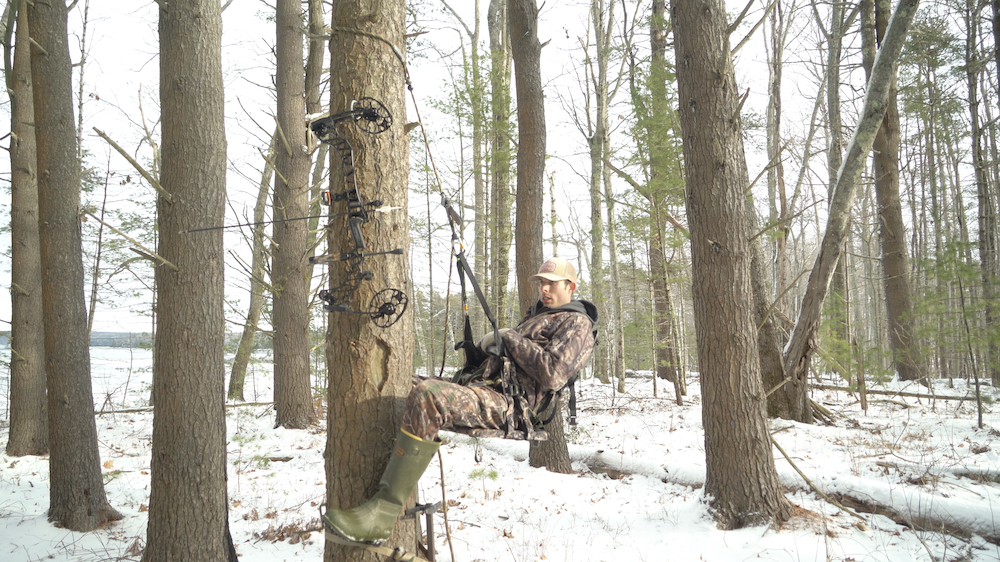
I bought the Tool Belt for deer hunting because I needed something to hold my saddle hunting gear in easy reach while I climbed the tree. I’ve been using the Tool Belt in front of me while I climbed instead of on my back. This has worked very well for climbing trees quietly and seamlessly. So far I’ve used it a handful of times while deer hunting and have been very impressed. Below I share my experiences, thoughts, pros, and cons.

Credibility

If you’re wondering why I am qualified to write this article, you can head on over to my About Page to learn more about who I am.

Quick Bullet Point Review Overview

Pros

  • Build Quality
  • Comfortable
  • Storage
  • Well-Thought-Out Pockets, Dividers, and Zippers
  • Dual-Access Design
  • Stealthiness

Cons

  • Waterproof or Water-Resistant?
  • Fabric Noise
  • Warranty

Pros of the Sitka Tool Belt Fanny Pack

Build Quality

As you would expect from Sitka Gear the Tool Belt feels premium. That said, I do think more time is needed to determine the durability of the pack.

I carry my Tool Belt in my backpack until I plan to climb a tree. I also keep my climbing sticks in my backpack and the two rub against each other. Although I do think the Tool Belt could last years without getting damaged against the brush, it’s still up in the air whether metal contact will cause a tear in the fabric.

If you’re using this fanny pack in a more conventional way I don’t foresee any durability issues fabric-wise. However, many small bungees are great for securing items in pockets but I could see those eventually breaking if caught on a stick.
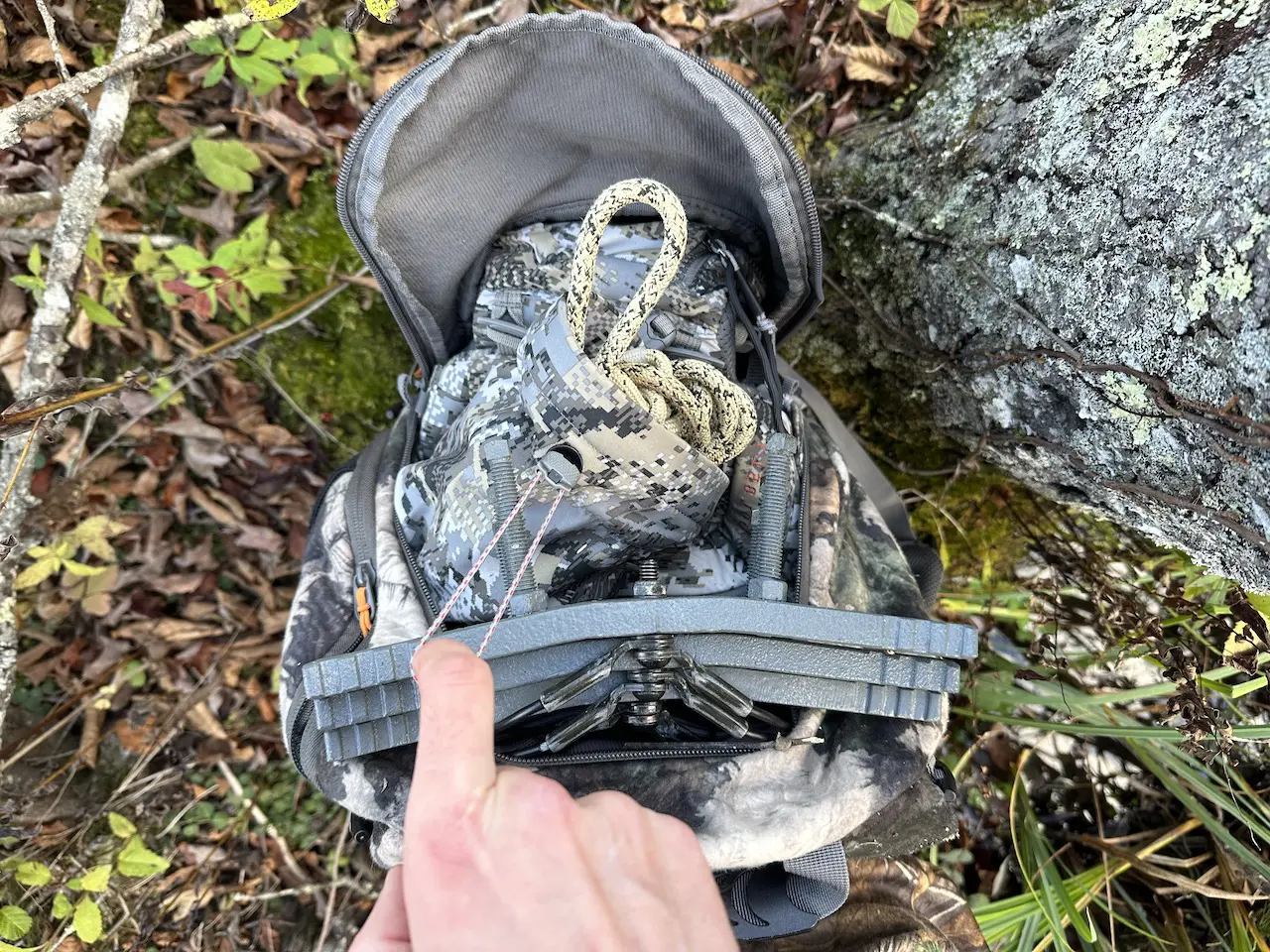
Fitting the Sitka Tool Belt into a Backpack

Comfortable

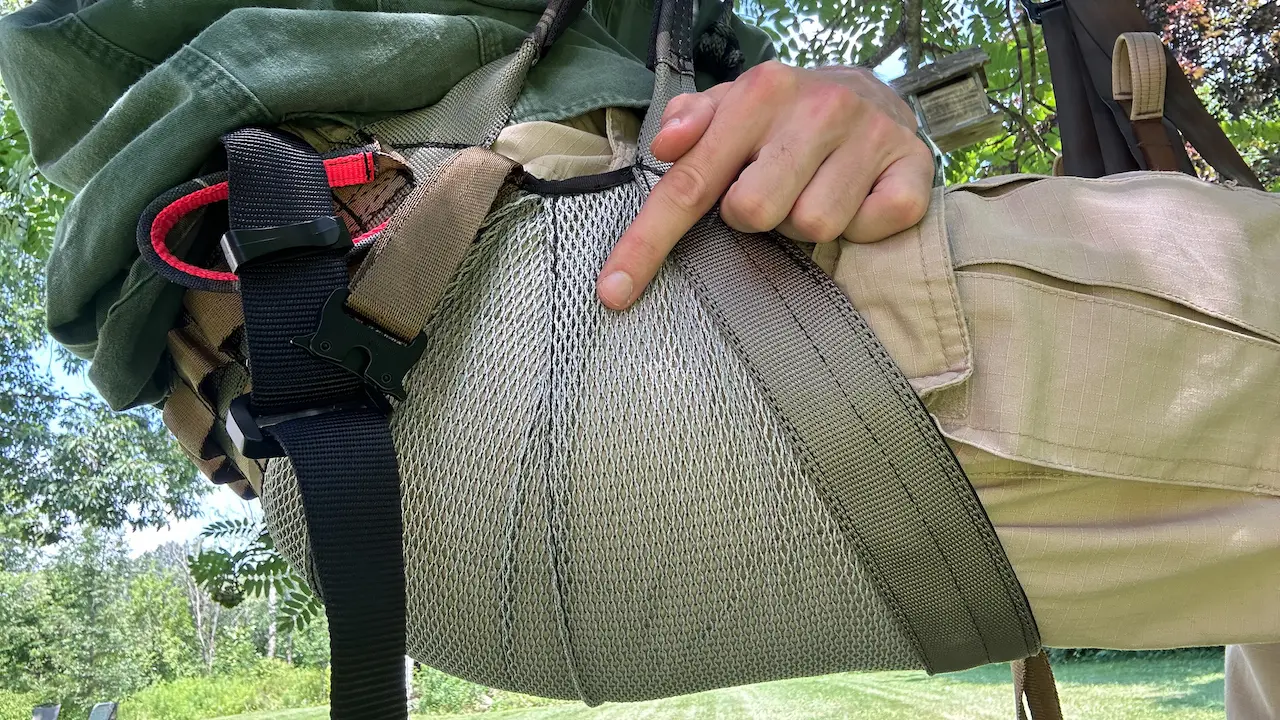
As you can see from the photo below, there is nice plush cushioning all the way around the waist of the fanny pack. This makes it very comfortable, especially for long hikes when you have a good bit of weight in the pack. 

Although plush and bulky-looking you don’t really notice the bulk when it’s against your waist and it’s surprisingly lightweight. So the padding does not add a lot of unnecessary weight. In my opinion, it’s worth the little extra weight for the comfort benefits you get.

The Tool Belt also comes with backpack straps, so if you’re planning to carry it for long distances and/or have fairly heavy gear in it, then that would come in handy. Personally, I took the backpack straps off for more streamlined use. That said, I put mine inside backpack for transport so I do not need them.

Sitka Gear Tool Belt Comfortable Waist Padding

Storage

The Tool Belt has 600 cubic inches of storage capacity. For me, this seems to be the perfect size for everything I would need for hunting. Even for other types of hunting, I think this is a good size. Too much bigger and it starts to make more sense to carry a backpack.

For saddle hunting, I’ve successfully organized all my essential gear in the Tool Belt. Below, I’ve listed the specific gear I use, which fits perfectly into the Tool Belt. Additionally, I’ve included before and after photos of the Tool Belt to provide a visual representation of how it looks when empty and when filled with the mentioned gear.

The tool belt holds the following saddle hunting gear in easy reach while I climb:

  • Bullman Outdoors Apex Ring of Steps
  • EWO OCB Buckle & Strap
  • Saddle Harness
  • Dryad Drey Saddle Hammock
  • Extra Lineman Belt
  • Tether
  • Climbing Stick Straps
  • Bow and Gear Hangers
  • Tree Trimmers
Hunting Gear That Fits Into Sitka Tool Belt
Sitka Tool Belt Empty: Hunting Gear That Fits Into Sitka Tool Belt
Sitka Tool Belt Loaded with Hunting Gear
Sitka Tool Belt Loaded with about 600 Cubic Inches of Hunting Gear

Well-Thought-Out Pockets, Dividers, and Zippers

The Tool Belt offers various pocket sizes, making it easy to organize specific gear for efficient use. It includes both zippered and elastic pockets, serving as dividers for dedicated gear storage. Sitka did an excellent job providing ample storage options while still leaving plenty of room in the main pouch for larger items.

Sitka Tool Belt 600 Cubic Inches of Storage Capacity

Dual-Access Design

One of the standout features of the Tool Belt is its dual-access design, allowing access to the main pouch from both the front and back. This is particularly advantageous when wearing it on your waist, as it enables easy access to your gear without the risk of items spilling out.

This feature has been a game changer for me when climbing trees while saddle hunting. It allows me to access gear with minimal movement and noise, ensuring nothing falls out from the front.

Additionally, if you prefer to access the Tool Belt from the front like a conventional fanny pack, you have that option as well. I find this to be a great alternative when the Tool Belt is not worn around my waist.

If you’re looking for the best fanny pack for saddle hunting, the Sitka Tool Belt is the best for this reason alone.

Sitka Gear Tool Belt Front Access To Main Pocket
Sitka Gear Tool Belt Rear Access To Main Pocket

Sitka Tool Belt Stealthiness

Bungee Cords

The company appears to have gone to lengths to quiet the Tool Belt as much as possible by eliminating as much metal and noisy material on the exterior of the fanny pack. You can see this by the multiple bungee cords, including the T-bungee holding the main pocket of the bag closed.

Although there are some zippers, in a lot of cases the bungees have reduced the amount of zipping distance needed, reducing noise.

Magnet

The rear main access pocket uses a magnet to keep the pocket shut when you’re regularly using it. This is something I’ve absolutely loved for climbing trees and need to constantly be in the bag pulling new gear out and want to ensure the remaining gear does not fall out.

When you’re done using this pocket you can zip it and bungee it closed so you’re not relying on just the magnet to keep gear in the bag.


Sitka Tool Belt Review
T-Bungee Holding Main Pocket Closed
Sitka Tool Belt Bungee Cords
Dump Pouches Use Bungee Cords To Hold Gear

Cons to Consider Before Buying

Bungee Cord Cinch and Fragility

One stand-out con about this fanny pack is that the dump pouch bungee cord does not completely seal, so gear could fall out. It might be enough cinch for a water bottle, but I use mine for gear. I only put gear in these dump pouches that I believe won’t fall out, like my saddle hammock and ropes.

Additionally, time will tell how the dump pouch bungee cords hold up. They feel fragile and like they could get caught on something and break.

Sitka Tool Belt Dump Pouch Cinch
Sitka Tool Belt Dump Pouch Bungee Cord Cinched

Fabric Noise

The fabric of the Tool Belt is pretty quiet but it’s not silent by any means. It has a shell-like feel to it, but its soft, so it makes a little noise when sticks scratch against it. I am content with how quiet it is so I wouldn’t let the noise discourage you from buying it. I do wish I was a little more quiet though.

Water-Resistant?

Based on the shell-like feel of the pack it seems like it could withstand some light rain without seeping through. I’m fairly confident in that, however, I do think it would seep eventually. That said, I can’t find any evidence anywhere that this pack is water-resistant or waterproof. At the time of this review, very little information is given on the Sitka website about the Tool Belt.

No Lifetime Warranty

Something else to consider is that there is no Lifetime Warranty for the Sitka Tool Belt which isn’t the end of the world. Sitka is also known for creating excellent quality products. That said, it’s always nice to have that lifetime warranty like some other companies in the hunting industry.

Although they do not offer a lifetime warranty, they do offer “repairs at a reasonable cost”.

Sitka Tool Belt Price

The price of this Sitka Tool Belt varies depending on the time of year. You can check the current price on Amazon here. Normally, it is about 240$, that said I bought mine during the off-season when it was on sale for 180$. I recommend checking prices during the off-season to see if you can get a deal like this because who doesn’t want to save 60$? That’s 25% off!

Sitka Tool Belt vs Badlands Monster

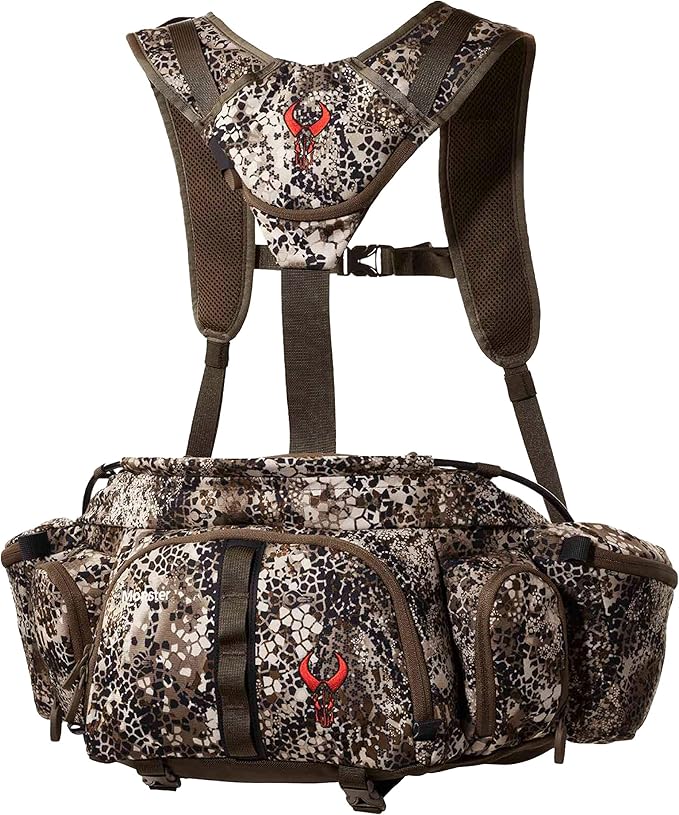
I conducted a field-tested review of the Badlands Monster too. Below I share some of the similarities and differences of the two fanny packs based on my reviews.

Brand and Reputation:

Sitka Gear: Sitka is known for its high-quality hunting and outdoor gear. They are respected for their focus on attention to detail and therefore great performance.

Badlands Gear: Badlands is another reputable brand in the outdoor and hunting industry. They are known for their rugged and durable products which include an unconditional lifetime warranty.

Capacity and Size:

Sitka Tool Belt: Sitka Tool Belt is a smaller, streamlined, and minimalist design. It holds 600 cubic inches of storage and for carrying essential tools and equipment.

Badlands Monster Fanny Pack: The Badlands Monster Fanny Pack offers 1100 cubic inches of storage, almost 2x more than the Sitka Tool belt. This means more storage space for gear and accessories. However, this comes at a cost of bulkiness.

Organization:

Both offer many pockets for different tools and gear. The Badlands Monster has more space while the Sitka Tool Belt is more efficient with the smaller space by having more pockets that are better by being well-thought-out.

Comfort and Fit:

Both fanny pack designs are comfortable and fit well. They both have great padding, do a great job at distributing weight, and have attachable shoulder straps that can be added for improved support. The sleeker design of the Tool Belts gives it a slight advantage in my opinion.

Material and Durability:

Both brands are known for producing durable and high-quality outdoor gear. However, Badlands prides itself on its tough custom-made fabric with reinforced stitching and fabric in high-wear areas. They also offer a lifetime warranty to back up their durability claims. Badlands has the advantage here.

Water-Resistance:

The Badlands takes the cake here again, it has a C6 DWR coating on it that makes it water-resistant. There is no mention of the Sitka Tool Belt being waterproof or water-resistant that I could find. Based on my experience with the Tool Belt though, it does seem to repel water a bit because it is made out of what I would compare to a soft shell material.

Price:

The Sitka Tool Belt (240$) is more expensive than the Badlands Monster (180$). That said, I got mine on clearance for the same price as the Badlands Monster. You may find sales after the hunting season is over for both so keep your eye out.

Questions & Community

If you have more questions about the Sitka Tool Belt or questions in general you can ask them on Facebook. You may also find answers to your questions on my YouTube Channel.

Badlands Monster Review (Field-Tested): Best Hunting Fanny Pack?

Here are field-tested details on the Badlands Monster Fanny Pack. This in-depth review covers its features, durability, and how it performs in the field so you can make an informed purchase.

The Badlands Monster fanny pack boasts a thoughtful blend of stealthiness, durability, water resistance, ample pockets, and customizable features, demonstrating a clear dedication to meeting the needs of hunters.

Beyond its core attributes, it’s the attention to detail and subtle nuances that truly set this fanny pack apart, fostering a genuine appreciation for its seamless functionality when compared to other, less thoughtfully designed options on the market. Keep reading to get the full review on the Badlands Monster Fanny Pack.

This post contains Amazon and other affiliate links, which means I’ll receive a commission if you purchase through my link, at no extra cost to you. Of course, you are not obligated to use my links, but it does help fund these posts in hopes of bringing more value to you.

Quick Bullet Point Overview

Pros

  • Water Resistant
  • Build Quality
  • Unconditional Lifetime Warranty
  • Comfortable
  • Pockets & Zippers

Cons

  • Size
  • Waterproof?
  • Noise

Pros of the Badlands Monster Fanny Pack

Water Resistant

I liked that the Monster is water-resistant, the material that the pack is made of is highly resistant to water (C6 DWR) to the point where you need a really good soaking for it to start seeping through.

Build Quality

It also has extremely strong and durable stitching. You can feel the excellent build quality of the material, it feels like it’s bulletproof. It’s made from their KXO-32 fabric which has an excellent balance of strength, stealth, and water resistance.

Badlands Monster Hunting Fanny Pack Review
Badlands Monster Fanny Pack Review: I wear The Monster on my front to store saddle hunting accessories.

Badlands Unconditional Lifetime Warranty

My favorite aspect of this pack is that Badlands has an unconditional lifetime warranty. If you’re unsatisfied in any way you can just return it. If you put a hole in it after years of use, they actually encourage you to return it so they can improve their products.

I’m always a big advocate for unconditional lifetime warranties because it shows how much confidence a company has in the quality of their gear and care for their customers.

Comfortable

There is a lot of padding which makes the Monster very comfortable for long hikes when deer hunting. It also comes with removable straps which I appreciate because I rarely shoulder straps.

I’m also tall and lanky (6’3” 150 lbs) and was worried it would not be comfortable or fit me well. I was happy to find that it fit just fine with the adjustable straps adjusted.

Pockets and Zippers

Another great aspect of the pack is that it has many pockets. This is important for deer hunters because when you have a lot of gear it is nice to dedicate certain pockets to specific gear so it is easy to find when hunting.

The pocket zippers have large tounges with grip so they are easy to grab with gloves. Additionally, they’re made out of strong plastic instead of metal so they hardly make any noise. The zipping action itself is also quiet so you can get gear out of it while hunting without spooking deer. These stealthy features are critical for deer hunters.

Cons to Consider Before Buying

Size (Pro and a Con)

Although it is a comfortable fanny pack, it is big. This is a pro and a con. It’s a pro because you can hold a lot of gear which is great, but if you don’t need to hold a bunch of gear you may find this pack is too big. It has 1100 cubic inches of storage potential.

Field-Testing Badlands Monster Fanny Pack

Waterproof?

One of my biggest reasons for buying this fanny pack was to reduce odor. I figured buying a waterproof fanny pack with a polyurethane lining with taped seams (this is what rain gear is made of) would be a good solution. This is because polyurethane isn’t breathable so it would help trap odors. But after receiving the Monster I found out that it’s not actually “waterproof” as it claims because it does not have a waterproof polyurethane lining or taped seams.

Instead, the Monster uses a different method of waterproofing that makes it highly water-resistant called C6 DWR. You need a really good soaking for it to start seeping through. However, it was not waterproof like I was expecting so keep that in mind when buying.

Here are the emails confirming this with Badlands Gear themselves:

Noise

The KXO-32 fabric with C6 DWR water-resistant coating is quiet but not silent. However, it is still a quiet finish compared to other fanny packs on the market, but it’s worth mentioning. It’s definitely quieter than a cheap plain nylon military fanny pack.

Badlands Monster Price


Badlands Monster Fanny Pack Best Fanny Pack For Deer Hunting

Check Amazon's Price Check Cabela's Price 

Badlands Monster vs Sitka Tool Belt

I also conducted a field-tested review of the Sitka Tool Belt. Below I share some of the similarities and differences of the two fanny packs based on my reviews.

Brand and Reputation:

Sitka Gear: Sitka is known for its high-quality hunting and outdoor gear. They are respected for their focus on attention to detail and performance.

Badlands Gear: Badlands is another reputable brand in the outdoor and hunting industry, known for its rugged and durable products which include an unconditional lifetime warranty.

Capacity and Size:

Sitka Tool Belt: The Sitka Tool Belt is a smaller, streamlined, and a minimalist design. It holds 600 cubic inches of storage and is meant for carrying essential tools and equipment.

Badlands Monster Fanny Pack: The Badlands Monster Fanny Pack offers 1100 cubic inches of storage, meaning almost double the storage space for gear and accessories. However, this comes at a cost of more bulkiness.

Organization & Pocket Access:

Both offer many pockets for different tools and gear. The Badlands Monster has more space while the Sitka Tool belt is more efficient with the smaller space by having more pockets and dual access points.

Comfort and Fit:

Both fanny pack designs are comfortable and fit well. They both have great padding, do a great job at distributing weight, and have attachable shoulder straps that can be added for improved support. The sleeker design of the Tool Belts gives it a slight advantage in my opinion.

Material and Durability:

Both brands are known for producing durable and high-quality outdoor gear. However, Badlands prides itself on its tough custom-made fabric. They also offer a lifetime warranty to back up their durability claims. Badlands has the advantage here in material durability.

Both have a slightly noisy material that I would describe as soft-shell. 

Water-Resistance:

The Badlands takes the cake here, it has a C6 DWR coating on it that makes it water-resistant. There is no mention of the Sitka Tool Belt being waterproof or water-resistant that I could find.

Price:

The Sitka Tool Belt is more expensive than the Badlands Monster. That said, I got mine on clearance for the same price as the Badlands Monster. You may find sales after the hunting season is over for both so keep your eye out.

Questions & Community

Hopefully, you found this Badlands Monster review helpful. If you have more questions about the Badlands Monster or questions in general you can ask them on my  Forum and Facebook Group. If you have questions for me please put them in these places and I will get back to you. The community can also help answer your questions. You may also find answers to your questions on my YouTube Channel.

9 Best Calibers & Cartridges For Moose Hunting

The best calibers and cartridges for moose hunting will have a good balance of power, reach, recoil, availability, and affordability. Balance these based on what’s most important to you for your hunting style and the situations you’ll be hunting in. This will help you determine the best moose calibers and cartridges for you.

Although most cartridges and calibers on the market can take down moose with good shot placement, this article focuses on the best of the best for dropping moose in their tracks fast.

This post contains Amazon and other affiliate links, which means I’ll receive a commission if you purchase through my link, at no extra cost to you. Of course, you are not obligated to use my links, but it does help fund these posts in hopes of bringing more value to you!

Calibers vs Cartridges

What is a Rifle Caliber

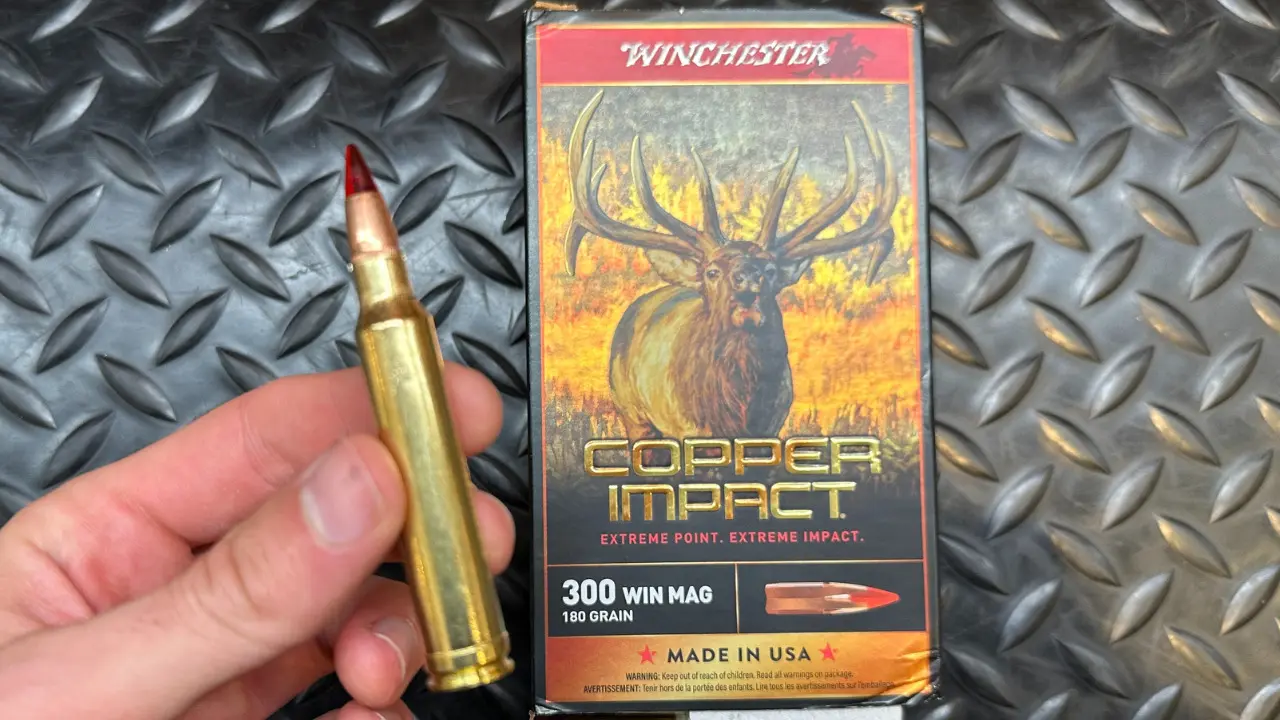
A caliber is the diameter of a bullet. Many hunters are confused between calibers and cartridges. For example, 30-30, 30-06 Springfield, .300 Win Mag, and 300 RUM Are all 30 caliber bullets because they are .308 diameter bullets. However, these rifles vary significantly in their performance, despite being the same caliber.

What is a Rifle Cartridge

A cartridge is the casing that holds the bullet, powder, and primer. Hunters often but incorrectly use caliber to mean cartridge. So it is important to clarify before we dive in. But we’ll be diving into both in this article.

Best Calibers For Moose Hunting

The Best Balance

.28 to .338 caliber rifles are the best for moose hunting because they offer the best balance of power, reach, and recoil. However, it is important to choose the correct cartridge in these calibers which is what I’ll be elaborating on below.

Smaller Calibers

Of course, you can kill moose just fine with smaller calibers with good shot placement. However, blood trails will likely be longer and the reality is hunters don’t always make a perfect shot. With smaller caliber bullets you’re leaving room on the table for wounding a moose, especially if you hit bone.

Larger Calibers

Don’t get me wrong, there are some larger calibers than the ones listed below that have excellent power and can drop moose with more power. These often come at a cost. For example, they can be expensive, hard to find, heavy, and produce lots of recoil. If you can handle larger calibers then go for it, it can only help. However, you will find the cartridges listed below are plenty for taking moose in any situation.

Larger caliber bullets, with their extra energy, help to put down moose when the shot isn’t perfect. The extra bullet energy and bone-breaking ability of larger and faster calibers can be the difference between a recovered moose and an unrecovered moose. This is also helpful when you’re trying to keep the moose from running as far after the shot due to the larger energy impact. 

Best .28 Caliber Cartridges For Moose Hunting

7mm Remington Magnum

Knockdown Power or Energy

The 7mm Remington Magnum bullet is a .284 caliber. So the bullet diameter is smaller than the 30 caliber .300 Win Mag and quite a bit smaller than the .338 caliber .338 Win Mag.

Don’t let its smaller size fool you, it’s still a magnum cartridge has excellent moose-killing ballistics, and is a favorite among many moose hunters. A 175 gr bullet produces 3178 ft/lbs of energy at the muzzle. This has slightly more energy than a 30-06 Springfield.

Reach: Bullet Velocity

The benefit, however, of the smaller bullet diameter in a magnum cartridge is speed and penetration, especially at longer distances. The smaller bullets also have better ballistic coefficients than larger 30+ caliber bullets.

To get the same penetration and flat trajectory as a 7mm Rem Mag (.284 caliber) in a .30 caliber rifle you would need to upgrade to a 300 Win Mag, which is a much bigger bullet than the 30-06 Springfield.

A 175 gr 7mm Rem Mag bullet can reach a velocity of 2860 ft/s which is comparable to the 300 Win Mag with similar bullet weight.

Recoil

Another benefit of having a smaller bullet is reduced recoil. If you’re looking for a magnum cartridge that has excellent moose-killing power with a fair bit less recoil than the .300 Win Mag or .338 Win Mag the 7mm Rem Mag is an excellent option. It takes a 7mm Rem Mag 15-20% less energy to reach the speeds of a 300 Win Mag because of the smaller bullet.

It delivers excellent performance while only having 7% more recoil than a 30-06 Springfield.

Availability

The 7mm Rem Mag is a popular round and is common in stores and online. It’s comparable in availability to the .300 Win Mag and .338 Win Mag.

Affordability

Quality moose cartridges cost about 65$ per box of 20 cartridges which is a fair price. For premium rounds, you’re looking at around 100$ per 20 rounds which is also to be expected.

7mm Remington Magnum 175 Grain Moose Hunting Ammo

Check Guns.com's Price Check Cabela's Price 

7mm Remington Ultra Magnum (RUM)

Knockdown Power or Energy

The 7mm RUM is the largest 7mm cartridge on the market. It can provide 25% more energy at 300 yards than the 7mm Rem Mag with muzzle energies of 3555 ft-lbs using 175 gr bullets. This means the 7mm RUM has almost 400 ft-lbs more energy than the 7mm Win Mag.

For comparison, the 7mm RUM has 500 fewer ft-lbs of energy than the .300 Win Mag (4075 ft-lbs, 180 gr bullet).

Reach: Bullet Velocity

The 7mm RUM can push a 175 gr bullet 3025 ft/s. This is about the same speed as a .300 Win Mag for a similar-sized bullet. So you can see that the 7mm RUM has some speed behind it.

Recoil

The velocity of the 7mm RUM does come at a cost. You’re going to have a large muzzle blast with sharp recoil and shorter barrel life.

Availability

7mm RUM ammo is not the most popular round. For this reason, it can be hard to find ammo. Although it’s not a super popular round it’s one of the best elk cartridges.

Affordability

Ammo ranges from 75$-115$ per 20 rounds.

7mm Remington Ultra Magnum Ammo For Moose Hunting

Check Guns.com's Price 

Best .30 Caliber Cartridges For Moose Hunting

.300 Winchester Magnum – A Top Moose Hunting Cartridge

Knockdown Power or Energy

The .300 Win. Mag. is a heavy hitter and is one of the best cartridges for moose hunting. It produces more energy than the .338 Win Mag. For example, the 300 Win Mag 200 gr bullet produces 4100 ft/lbs of energy at the muzzle versus the .338 Win Mag 200 gr bullet which produces about 3900 ft/lbs.

Bullet Velocity

The .300 Win Mag will reach speeds up to about 3000 ft/s with 200 gr bullets which is very similar to the speed of the .338 Win Mag 200g bullets.

Recoil

Because of the smaller bullet, the .300 Win Mag will have about 15% less recoil than the .338 Win Mag. However, it has 33% more recoil than the 30-06 Springfield.

Availability

Although not as available as the well-known 30-06 Springfield, the .300 Win Mag is a very available cartridge. Most main rifle manufacturers have an option for 300 Win Mag, so ammo is not hard to find. The 300 Win Mag is a magnum cartridge option where you don’t need to worry about finding ammo. Some of the other magnum cartridges on this list can be harder to find.

Affordability

The price of 300 Win Mag varies depending on the manufacturer, however, in comparison to a 30-06 Springfield, you can expect to pay more per round. After researching some well-known ammo websites I found that it’s common to find a box of 20 rounds for 50$ with more premium ammo costing about 100$.

300 Winchester Magnum Ammo For Moose Hunting

Check Guns.com's Price Check Cabela's Price 

Can You Use a 30-06 For Moose?

Yes, the 30-06 Springfield can be used to take moose, especially in areas where you don’t expect to shoot more than a couple hundred yards. The 30-06 is capable of taking any animal in North America.

You can absolutely make it work with good shot placement. But magnum cartridges have more energy so they are more likely to put a moose down faster, especially if the shot isn’t perfect.

Below is a video of a big Maine bull being shot with 30-06 Springfields.

Best .338 Caliber Cartridges For Moose Hunting

.338 Winchester Magnum: A Favorite Among Moose Hunters

Knockdown Power or Energy

The .338 Win Mag is a very powerful round and has a lot of down-range energy which is what makes it such a formidable moose cartridge. With a 250-gr bullet, the .338 Win Mag has about 3914 ft/lbs of energy at the muzzle.

As a rough comparison, the .338 Win Mag has about the same energy out to 200 yards as the .30-06 Springfield does at the muzzle.

Reach & Bullet Velocity

Velocities of the .338 Win Mag reach up to 2950 ft/s with a 200-grain bullet, whereas the 30-06 Springfield will reach these speeds with a much lighter 150-grain bullet. This means you can throw a bigger bullet further and flatter with the .338 Win Mag making it an excellent option for moose hunting.

The .338 Win Mag and the .300 Win Mag are fairly comparable rounds when looking at velocity and energy. The biggest difference is that the .338 is a bigger diameter bullet that creates bigger wound channels. A bigger bullet like this is great for moose-sized animals.

Recoil

Although this magnum cartridge will pack a punch and is about double the recoil of a .308, it is not bad for a .338 cartridge. For example, it has less recoil than .338 RUM and .338 Lapua.

Ammo Availability

Since the .338 Win Mag is a commonly used caliber, you shouldn’t have an issue finding ammunition. This is great when you’re traveling to hunt because there will almost always be a store that will carry .338 Win Mag ammunition.

Ammo Affordability

The price of .338 Winchester Magnum ammunition varies depending on the manufacturer. However, the average price for a box of 20 rounds is about about 80$. It’s more expensive than 30-06 Springfield ammo but the .338 Win Mag is larger so a higher price is to be expected. That said, I would say the 300 Win Mag is more available than the 338 Win Mag.

338 Winchester Magnum Ammo For Moose Hunting

Check Guns.com's Price Check Cabela's Price 

.338 Remington Ultra Magnum (RUM)

Knockdown Power or Energy

The .338 RUM is one of the most powerful .338 caliber cartridges in production. 250 gr bullets have 4540 ft-lbs of energy at the muzzle. For comparison, a .338 Win Mag has 3914 ft-lbs of energy at the muzzle. You get an extra +/- 625 ft-lbs of energy with the RUM with the same-sized bullet.

Reach & Bullet Velocity

If you’re looking for a .338 caliber bullet that has an even flatter trajectory than the .338 Win Mag, the .338 RUM is a great choice. It can throw 250 gr bullets at speeds around 2860 ft/s. For comparison, a 250 gr .338 Win Mag cartridge will have velocities of 2,655 ft/s. So you’re looking at about +/- 200 fps higher velocities with the .338 RUM.

Recoil

One of the biggest downsides of the .338 RUM is the recoil. The 338 RUM +/- 38 ft-lbs of recoil energy compared to +/- 30 ft-lbs for the 338 Win Mag is the same bullet weight. This means the 338 RUM has about 20% more recoil than the 338 Win Mag.

Availability

338 RUM ammo is not quite as easy to find as more popular cartridges. That said, most big retailers in the USA keep some 338 Ultra Mag ammo in stock. Buying online is a great option if you’re not in a hurry for ammo.

Affordability

You can expect to pay 75$ to 150$ for 20 rounds .338 RUM ammo, with 150$ being premium ammo. It’s a little more expensive than .338 Win Mag ammo on average.

338 Remington Ultra Magnum Ammo For Moose Hunting

Check Guns.com's Price

Best Large Caliber Cartridges For Moose Hunting

I’ve listed some of the best large-caliber cartridges for moose below. If you can handle the extra recoil and weight of guns chambered in these cartridges then these listed below would be great options:

  • 375 H&H Magnum

  • 35 Whelen

  • 375 Ruger

Best Moose Calibers and Cartridges – Final Thoughts

Hopefully, you found this article on the best calibers and cartridges for moose hunting helpful. Again, many cartridges on the market can take down moose with good shot placement, but this post focuses on the best of the best.

A good balance of power, reach, recoil, availability, and affordability in relation to your hunting style and situations are the top things to consider when picking out a moose hunting caliber and cartridge. 

Related Articles:

Find Me On:

5 Best Calibers & Cartridges For Elk Hunting

The best calibers and cartridges for elk hunting will have a good balance of power, reach, recoil, availability, and affordability. Balance these based on what’s most important to you for your hunting style and the situations you’ll be hunting in. This will help you determine the best calibers and cartridges for you.

Although most cartridges and calibers on the market can take down elk with good shot placement, this article focuses on the best of the best.

This post contains Amazon and other affiliate links, which means I’ll receive a commission if you purchase through my link, at no extra cost to you. Of course, you are not obligated to use my links, but it does help fund these posts in hopes of bringing more value to you!

Calibers vs Cartridges

What is a Rifle Caliber

A caliber is the diameter of a bullet. Many hunters are confused between calibers and cartridges. For example, 30-30, 30-06 Springfield, 300 Win Mag, and 300 RUM Are all .30 caliber bullets because they are .308 diameter bullets. However, these rifles vary significantly in their performance, despite being the same caliber.

What is a Rifle Cartridge

A cartridge is the casing that holds the bullet, powder, and primer. Hunters often but incorrectly use caliber to mean cartridge. So it is important to clarify before we dive in. But we’ll be diving into both in this article.

Best Calibers For Elk Hunting

The Best Balance

.28 to .338 caliber rifles are the best for elk hunting because they offer the best balance of power, reach, and recoil. However, it is important to choose the correct cartridge in these calibers which is what I’ll be elaborating on below.

Smaller Calibers

Of course, you can kill elk just fine with smaller calibers with good shot placement. However, the reality is hunters don’t always make a perfect shot. Larger caliber bullets, with extra energy, help to put down elk when the shot isn’t perfect. It can be the difference between a recovered elk and an unrecovered elk.

Larger Calibers

Don’t get me wrong, there are some larger calibers than the ones listed below that have excellent power and can drop elk with more power. These often come at a cost.

For example, they can be expensive, hard to find, heavy, and produce lots of recoil. If you can handle larger calibers then go for it, it can only help. However, you will find the cartridges listed below are plenty for taking elk in any situation.

Elk Hunting Caliber and Cartridge Options
You can kill elk with many different calibers and cartridges, however, some are better than others

Best .338 Caliber Cartridges For Elk Hunting

.338 Winchester Magnum: A Favorite Among Elk Hunters

Knockdown Power or Energy

The .338 Win Mag is a very powerful round and has a lot of down-range energy which is what makes it such a formidable elk cartridge. With a 250-gr bullet, the .338 Win Mag has about 3914 ft/lbs of energy at the muzzle.

As a rough comparison, the .338 Win Mag has about the same energy out to 200 yards as the .30-06 Springfield does at the muzzle.

The 30-06 Springfield is no slouch either and is easily capable of taking down an elk with good shot placement. So you can see why the .338 Win Mag is a favorite among elk hunters.

Reach & Bullet Velocity

Velocities of the .338 Win Mag reach up to 2950 ft/s with a 200-grain bullet, whereas the 30-06 Springfield will reach these speeds with a much lighter 150-grain bullet. This means you can throw a bigger bullet further and flatter with the .338 Win Mag making it an excellent option for elk hunting.

Recoil

Although this magnum cartridge will pack a punch and is about double the recoil of a .308, it is not bad for a .338 cartridge. For example, it has less recoil than .338 RUM and .338 Lapua.

Ammo Availability

Since the .338 Win Mag is a commonly used caliber, large stores will likely have some in stock. And if you can’t find any in-store you should be able to find some online. However, it won’t be as available as the 30-06 Springfield.

Ammo Affordability

The price of .338 Winchester Magnum ammunition varies depending on the manufacturer. However, the average price for a box of 20 rounds is about about 80$. It’s more expensive than 30-06 Springfield ammo but the .338 Win Mag is larger so a higher price is to be expected.

338 Winchester Magnum Ammo For Elk Hunting

Check Guns.com's Price Check Cabela's Price 

.338 Remington Ultra Magnum (RUM)

Knockdown Power or Energy

The .338 RUM is one of the most powerful .338 caliber cartridges in production. 250 gr bullets have 4540 ft-lbs of energy at the muzzle. For comparison, a .338 Win Mag has 3914 ft-lbs of energy at the muzzle. You get an extra +/- 625 ft-lbs of energy with the RUM with the same-sized bullet.

Reach & Bullet Velocity

If you’re looking for a .338 caliber bullet that has an even flatter trajectory than the .338 Win Mag, the .338 RUM is a great choice. It can throw 250 gr bullets at speeds around 2860 ft/s. For comparison, a 250 gr .338 Win Mag cartridge will have velocities of 2,655 ft/s. So you’re looking at about +/- 200 fps higher velocities with the .338 RUM.

Recoil

One of the biggest downsides of the .338 RUM is the recoil. The 338 RUM +/- 45 ft-lbs of recoil energy compared to +/- 35 ft-lbs for the 338 Win Mag is the same bullet weight. This means the 338 RUM has about 29% more recoil than the 338 Win Mag.

Availability

338 RUM ammo is not quite as easy to find as more popular cartridges. That said, most big retailers in the USA keep some 338 Ultra Mag ammo in stock. Buying online is a great option if you’re not in a hurry for ammo.

Affordability

You can expect to pay 75$ to 150$ for 20 rounds .338 RUM ammo, with 150$ being premium ammo. It’s a little more expensive than .338 Win Mag ammo on average.

338 Remington Ultra Magnum Ammo For Elk Hunting

Check Guns.com's Price

Best .30 Caliber Cartridges For Elk Hunting

.300 Winchester Magnum – A Top Elk Hunting Cartridge

Knockdown Power or Energy

Although the .300 Win. Mag. is a less powerful round than the .338 Win Mag it is still a heavy hitter and is one of the most popular cartridges for elk hunters.

The 300 Win Mag 200 gr bullet produces 4100 ft/lbs of energy at the muzzle versus the .338 Win Mag 200 gr bullet which produces 3900 ft/lbs of energy.

Bullet Velocity

The .300 Win Mag will reach speeds up to about 2950 ft/s with 180g bullets which is what the .338 Win Mag will throw 200g bullets.

Recoil

The .300 Win Mag will have about 15% less recoil than the .338 Win Mag. So it’s noticeable but not by much.

Availability

Although not as available as the well-known 30-06 Springfield, the .300 Win Mag is a very available cartridge. Most main rifle manufacturers have an option for 300 Win Mag, so ammo is not hard to find.

Affordability

The price of 300 Win Mag varies depending on the manufacturer, however, in comparison to a 30-06 Springfield, you can expect to pay more per round.

After researching some well-known ammo websites I found that it’s not uncommon to find a box of 20 rounds for 50$ with more premium ammo costing about 100$.

Best Calibers and Cartridges For Elk Hunting

Check Guns.com's Price Check Cabela's Price 

Best .28 Caliber Cartridges For Elk Hunting

7mm Remington Magnum

Knockdown Power or Energy

The 7mm Remington Magnum bullet is a .284 caliber. So the bullet diameter is smaller than the 30 caliber .300 Win Mag and quite a bit smaller than the .338 caliber .338 Win Mag.

Don’t let its smaller size fool you, it’s still a magnum cartridge has excellent elk-killing ballistics, and is a favorite among many elk hunters. A 175 gr bullet produces 3178 ft/lbs of energy at the muzzle.

Reach: Bullet Velocity

The benefit, however, of the smaller bullet diameter is a flatter trajectory. The 7mm Rem Mag offers better ballistics than the popular 30-06 Springfield.

The smaller bullets also have better ballistic coefficients than larger 30+ caliber bullets. Also, smaller bullets tend to have better sectional density leading to better penetration.

To get the same penetration and flat trajectory as a 7mm Rem Mag (.284 caliber) in a .30 caliber rifle you would need a 300 Win Mag, which is a much bigger cartridge than the 30-06 Springfield.

A 175 gr 7mm Rem Mag bullet can reach a velocity of 2860 ft/s which is very similar to the 300 Win Mag.

Recoil

Another benefit of having a smaller bullet is reduced recoil. If you’re looking for a cartridge that has excellent elk-killing power with a fair bit less recoil than the .300 Win Mag or .338 Win Mag the 7mm Rem Mag is an excellent option. It takes a 7mm Rem Mag 15-20% less energy to reach the speeds of a 300 Win Mag because of the smaller bullet.

It delivers excellent performance while only having 7% more recoil than a 30-06 Springfield.

Availability

The 7mm Rem Mag is a popular round and is quite common in stores and online. It’s comparable in availability to the .300 Win Mag.

Affordability

Quality elk cartridges cost about 65$ per box of 20 cartridges which is a fair price. For premium rounds, you’re looking at around 100$ per 20 rounds which is also to be expected.

7mm Remington Magnum 175 Grain Elk Hunting Ammo

Check Guns.com's Price Check Cabela's Price 

7mm Remington Ultra Magnum (RUM)

Knockdown Power or Energy

The 7mm RUM is the largest 7mm cartridge on the market. It can provide 25% more energy at 300 yards than the 7mm Rem Mag with muzzle energies of 3555 ft-lbs using 175 gr bullets. This means the 7mm RUM has almost 400 ft-lbs more energy than the 7mm Win Mag.

For comparison, the 7mm RUM has 500 fewer ft-lbs of energy than the .300 Win Mag (4075 ft-lbs, 180 gr bullet).

Reach: Bullet Velocity

The 7mm RUM can push a 175 gr bullet 3025 ft/s. This is about the same speed as a .300 Win Mag for a similar-sized bullet. So you can see that the 7mm RUM has some speed behind it.

Recoil

The velocity of the 7mm RUM does come at a cost. You’re going to have a large muzzle blast with sharp recoil and shorter barrel life.

Availability

7mm RUM ammo is not the most popular round. For this reason, it can be hard to find ammo. Although it’s not a super popular round it’s one of the best elk cartridges.

Affordability

Ammo ranges from 75$-115$ per 20 rounds.

7mm Remington Ultra Magnum Ammo For Elk Hunting

Check Guns.com's Price 

Best Elk Calibers and Cartridges – Final Thoughts

Hopefully, you found this article on the best elk hunting calibers and cartridges helpful. Again, there are many cartridges on the market that can take down elk with good shot placement, but this post focuses on the best of the best.

A good balance of power, reach, recoil, availability, and affordability in relation to your hunting style and situations are the top things to consider when picking out an elk hunting caliber and cartridge that best suits your needs.

Related Articles:

Find Me On:

Top 3 Hunting Saddles on the Market [2025]

These are the best of the best hunting saddles. The best for you will depend on your personal hunting style and what you value as a hunter. This article dives into the pros and cons of the top hunting saddles on the market this way you can narrow down which is suited best to your hunting style. Based on my experience, I also suggest what type of hunter I think would benefit most from each saddle.

I bought each of these saddles with my own money to test them out. If you’re looking for more info on any of these saddles I did a more in-depth review on each of the saddles mentioned in this article. You can find links to the full reviews within the paragraphs below.

This post contains Amazon and other affiliate links, which means I’ll receive a commission if you purchase through my link, at no extra cost to you. Of course, you are not obligated to use my links, but it does help fund these posts in hopes of bringing more value to you!

JX3 Hybrid (Most Comfortable Hunting Saddle)

JX3 Hybrid Pros

The pros of this saddle are that you can stay comfortable in your saddle all day with ZERO pain points. This is because the JX3 Hybrid seat does not cause any hip pinch or knee fatigue due to its unique design. Additionally, it has the best back support on the market which makes this saddle feel like a recliner in a tree. You get all of the mobility benefits of a conventional saddle but with more comfort.

JX3 Hybrid Cons

The cons of this saddle are that it is bulky and a bit heavy (+/-14 lbs). It feels lighter than it is because it comes with backpack straps attached to it for transport. However, it can be tricky getting it deep into the woods with all of your other gear quietly. I’ve left it at the base of a tree a few times so I wouldn’t have to lug it into the woods every day.

Who This Saddle Is For

The JX3 Hybrid is for those who value comfort over everything else. It’s for those who don’t mind the extra weight, bulk, and noise as long as they will be comfortable once they get situated. For this reason, the JX3 Hybrid is a powerful tool for all-day sits during the rut. The trade-off here is comfort for bulk.

You can check out my full review here: JX3 Hybrid Saddle Review.

most comfortable tree saddles for hunting

Check JX3's Price

Dryad Drey Hammock (Best Comfort + Minimalist Saddle)

The Drey is very comfortable and gives the JX3 Hybrid a run for its money. This saddle is much more lightweight and packable than the JX3 Hybrid and is almost as comfortable (although not quite as comfortable). However, you still get 80+% of the comfort. In most cases, it is worth the reduced comfort for much greater mobility and stealthiness.

Dryad Drey Hammock Pros

The pro of the Drey Saddle system is that you get a lightweight minimalist saddle with some of the best comfort on the market. You can use it like a conventional saddle, or wrap yourself up into a cacoon to have additional support and relief.

Dryad Drey Hammock Saddle Cocoon

Dryad Drey Hammock Cons

A con of this saddle is that when the tree is between your legs when you are sitting, the hammock can cause some pinching. This is especially true for larger trees. The hammock wants to push your knees together. It is a better experience to rest your knees on the trunk instead. For this reason, you may want knee pads for long sits.

Who This Saddle Is For

The Drey is for the saddle hunter who wants a small, compact saddle with as much comfort as possible. In some cases, the comfort comes at the cost of maneuverability (like in the cocoon) but it is worth having for extra relief during long hunts.

You can check out my full review here: Dryad Drey Hammock Review.

Dryad Drey Hammock Saddle
Dryad Drey Hammock Saddle – Using it as a regular saddle

CRUZR XC (Most Well-Rounded Hunting Saddle)

The Cruzr XC is a more conventional hunting saddle. It is known in the saddle hunting world as being one of the most comfortable conventional single-panel saddles. Because of this claim, I had to buy it to test it out myself.

CRUZR XC Pros

The XC was indeed by far the most comfortable conventional saddle I’ve tried (single panel or double panel). It is more comfortable than the Drey for sitting with the tree between your legs.

It has an adjustable bridge length and bridge pitch. The adjustable pleats are also a game-changer when it comes to added comfort. With these adjustment options, there is no hip pinch which single-panel saddles are notorious for. For this reason, the Cruzr XC is one of the hunting saddles on the market.

CRUZR XC Cons

The only con with this saddle is it does not have back support (although you can buy one separately). The added back support does help for long hunts but it is not as good as the JX3 Hybrid or Drey hammock.

Who This Saddle Is For

The Cruzr XC is for beginners and veteran saddle hunters alike. Both will love this saddle for its simplicity, comfort, and well-roundedness all in a lightweight and mobile package. This saddle is great for sitting and leaning.

You can find that review here: CRUZR XC Review.

Cruzr XC Saddle Review
CRUZR XC Saddle

More Saddle Hunting Resources:

Hopefully, you found this review of the best hunting saddle helpful. Find more saddle hunting information easily by navigating to one of my more specific articles:

More Saddle Reviews (Hands-on)

Saddle Hunting Gear & Buying Guides

Best Brands To Look For When Buying Hunting Saddles

  • Tethrd
  • JX3 Outdoors
  • Cruzr
  • New Tribe Aero Hunter

Top Brands To Shop For Saddle Hunting Gear

Some great places to find saddle hunting gear include:

Find Me On:

Dryad Drey Hammock Review | Most Comfortable Hunting Saddle?

This Dryad Drey review looks at comfort, noise, portability, mobility, adjustability, scent control, and build quality. The Drey is a not-so-well-known hunting saddle and it’s not like conventional saddles. This saddle uses a hammock as the saddle seat that is adjustable for serious comfort. I compared the Drey Hammock to 4 other top-selling saddles, you can find the other reviews linked below:

The other 4 saddles I reviewed included:

How I Tested The Dryad Drey

I bought the Dryad Drey with my own money to test it out.

I had about one month to get to test the saddle in my backyard. In this time I found both pros and cons of the Drey. There are a few different options to choose from on the Dryad website. The exact gear I bought was the Hybrid Saddle/Treestand Hunting Kit which includes:

  • 1 Killdeer Harness
  • 1 Full full-sized hammock
  • 1 Hitch

I also bought an 8mm tether from them with 2 carabiners attached which are needed to hunt out of this saddle but is not included in the kit (which is good for those who want to create their own tether).

Dryad Drey Review Criteria

The biggest factors I was looking for in the test included:

  • How Long I Felt Comfortable For
    • Back Support
    • Hip-Pinch
    • Knee Fatigue
    • Comfortable Enough to Nap?
  • Noise
  • Portability (to and from the stand)
  • Mobility (in the stand)
  • Adjustability
  • Scent Control
  • Build Quality

Dryad Drey Hammock Saddle Review

How The Drey Hammock System Works

The Drey system works by using a minimalistic harness (I bought the Killdeer harness) that is the main line of safety and security. This harness is what you will attach your lineman belt and your tree tether to.

The tree tether for the Drey is unique in that you’ll have two carabiners on it.

Once you get to hunting height and are ready to start hunting you will deploy the hammock. You will connect the hammock to a second carabiner located on your tree tether. This allows you to slowly release your full weight from your harness into your hammock.

The carabiner that is located on your harness remains attached but with no tension. This remains connected for safety. If the hammock were to ever fail you’ll still be safe.

How Long I Felt Comfortable For

Back Support

After testing all 5 saddles, it was clear that the Drey was a top contender. Out of the 5 saddles, it ranked 2 in comfort behind the JX3 Hybrid.

It was an extremely comfortable saddle, the main reason the JX3 Hybrid beat the Drey in comfort is that the JX3 removes all pressure from your knees with the metal frame against the tree. With the Drey, your knees will get sore if you don’t wear knee pads (like other saddles).

I also think the JX3 has slightly better comfort adjustability compared to the Drey.

That said, they are both extremely comfortable. The Drey can be deployed as a full-body cocoon that gives you excellent back support which is just as comfortable as the JX3. The only downside is that you’re not as mobile when you’re in the cocoon compared to the JX3.

Dryad Drey Hammock Saddle Cocoon

Even Weight Distribution

The hammock fabric evenly distributes your weight so there are no pressure points that cause hip pinch or that will cause your legs to fall asleep. This is one of the best features of this saddle and is what allows you to use it for a long period of time without moving or getting uncomfortable.

I sat in this saddle for an hour without moving and felt completely fine to keep going. Usually, after about an hour I can tell what could be an issue for those longer 8-10 hour sits.

From what I can tell an all-day sit would be easy in this saddle. You’ll likely need to adjust but you’re not going to be fidgeting around with the Drey every 20-30 minutes trying to get it comfortable. You’ll be able to go for hours without moving.

Hip-Pinch

Hip-pinch was basically non-existent thanks to the hammock design. The hammock has no webbing that can press into your hips making it so comfy compared to many other saddles on the market.

Adjustable Straps and Tabs

There are some adjustments that can be made to the hammock. The first is the quick adjustable straps on the top of the hammock when it is deployed.

I found that this did not offer much added comfort though because it adds too much pressure along the tightened area. I prefer to leave this strap alone and keep it completely untightened.

There are also adjustable tabs at the bottom of the hammock, located near your knee area. These tabs help you to lengthen or shorten the hammock by rolling it back onto itself or by unrolling the hammock to lengthen.

These tabs are helpful for increasing comfort and I used them to get the hammock positioned on my body exactly how I wanted it. When I had to make adjustments I used the tabs to make those small adjustments.

Dryad Drey Hammock Saddle

Leaning vs. Sitting & Knee Fatigue

Leaning was very comfortable. There were no pinch points or the feeling that the hammock was going to cut off circulation. I got the feeling I could lean in this hammock all day without any problems.

Personally, I’m a sitter. I found sitting to be extraordinarily comfortable when your knees are placed against the tree. However, it takes some adjustments to make it comfortable if you’re trying to straddle the tree with your legs (legs on both sides of the tree). I found that the hammock likes to push your legs into the tree which can be uncomfortable.

I’ve found that pulling the hammock from under your legs back to your butt greatly reduces the leg stress. However, then you have less support from the hammock under your legs. I found it to still be quite comfortable like this though. That said, you might want to consider knee pads.

Comfortable Enough to Nap?

The Dryad Drey hammock is so comfortable you can easily nap in it. I’m 6’3″ and I have just enough fabric where I can put the hammock behind my head to create a headrest. This makes it even more comfortable than the JX3 Hybrid in this regard. That said, the headrest comfort is only marginal because you need to sort of balance your head on the taught portion of the saddle.

However, the support is top-notch everywhere else.

Noise

One downside to the Drey hammock is that it makes a slight noise when moving and when sticks graze it. On a silent day, it could be something that you need to consider when moving in the saddle.

When you’re using the saddle in a more conventional way when the saddle fabric is more bunched up it’s quiet. It’s mostly the areas of the hammock that are more taught that create noise.

Portability

This saddle may have the best comfort-to-compactness ratio of any saddle on the market. The compactness makes it easily portable for long distances. This makes it an excellent choice for mobile hunters.

Mobility

Mobility once in the saddle is just like any other saddle when it is being used like a conventional saddle.

However, when you’re in the cocoon mobility is restricted because your arms are inside the cocoon. This makes it hard to grab your bow quietly in a fast-paced scenario.

Adjustability

The hammock offers quite good adjustability. For example, as mentioned it is versatile in how you can wear it.

Additionally, there are little straps that can be tightened or loosened at the top of the hammock. Once deployed, you can adjust these straps for a little bit more comfort.

I’m hoping that in future iterations the Drey will be more adjustable throughout the saddle and not just this area at the top.

Cleaning & Scent Control

Cleaning this saddle is simple. To clean it I would just put the Killdeer harness and hammock in a bucket of scent-free detergent and let it air dry periodically.

It seems like it would dry faster than a conventional saddle because the fabric is so thin and breathable.

Build Quality

The Dryad Drey hammock system seems to be made very well from what I can tell. That said, the hammock fabric is thin and time will tell how well it will hold up to hunting abuse.

Luckily, if you do tear your hammock it is much cheaper to replace than a conventional saddle (it’s like half the price).

The Killdeer harness seems to be built durable with heavy-duty webbing and threading and expect that to last a very long time.

Dryad Drey Review Final Thoughts

Out of the 5 top-selling saddles I tested I chose to keep the Dryad Drey hammock system.

I was looking for the ultimate lightweight system that would give me similar comfort to the JX3 Hybrid that I’ve used for the last few seasons. I absolutely love the JX3 Hybrid because of the comfort and it has allowed me to stay on stand a lot longer. However, the weight and bulk of the JX3 made it difficult to get into some of my hunting areas effectively.

The Dryad Drey with its comfortable seat and back support at a fraction of the bulk and weight made it the right choice for me.

Hopefully, this Dryad Drey hammock review helped you decide if the Drey is right for you.

Check out my other saddle reviews here:

5 Best Boots For Deer Trackers | Boots For Tracking on Snow

There are a few criteria that make some boots the best boots for deer trackers. I basically live in rubber boots as a professional wetland scientist, waterfowl hunter, and deer hunter located in the wet/snowy landscapes of Maine. Maine is also home to the best deer tracking in the U.S. For these reasons, I have a lot of experience choosing the right boots for tracking deer on snow.

Collectively, between the rubber boots I’ve tried for work and hunting (Lacrosse Footwear, Le Chameau, GumLeaf, Muck Boots, Bogs) and observing coworkers’ boot performance (Cabela’s, Dryshod, XtraTuf), I’ve been able to determine the best boots suited for tracking big woods bucks on snow.

Not all rubber boots are created equal. In this post, I share my best tips and suggestions when buying boots for tracking on snow so you get the most value out of your boots.

This post contains Amazon and other affiliate links, which means I’ll receive a commission if you purchase through my link, at no extra cost to you. Of course, you are not obligated to use my links, but it does help fund these posts in hopes of bringing more value to you!

Lacrosse Grange Boot (Affordable & Effective)

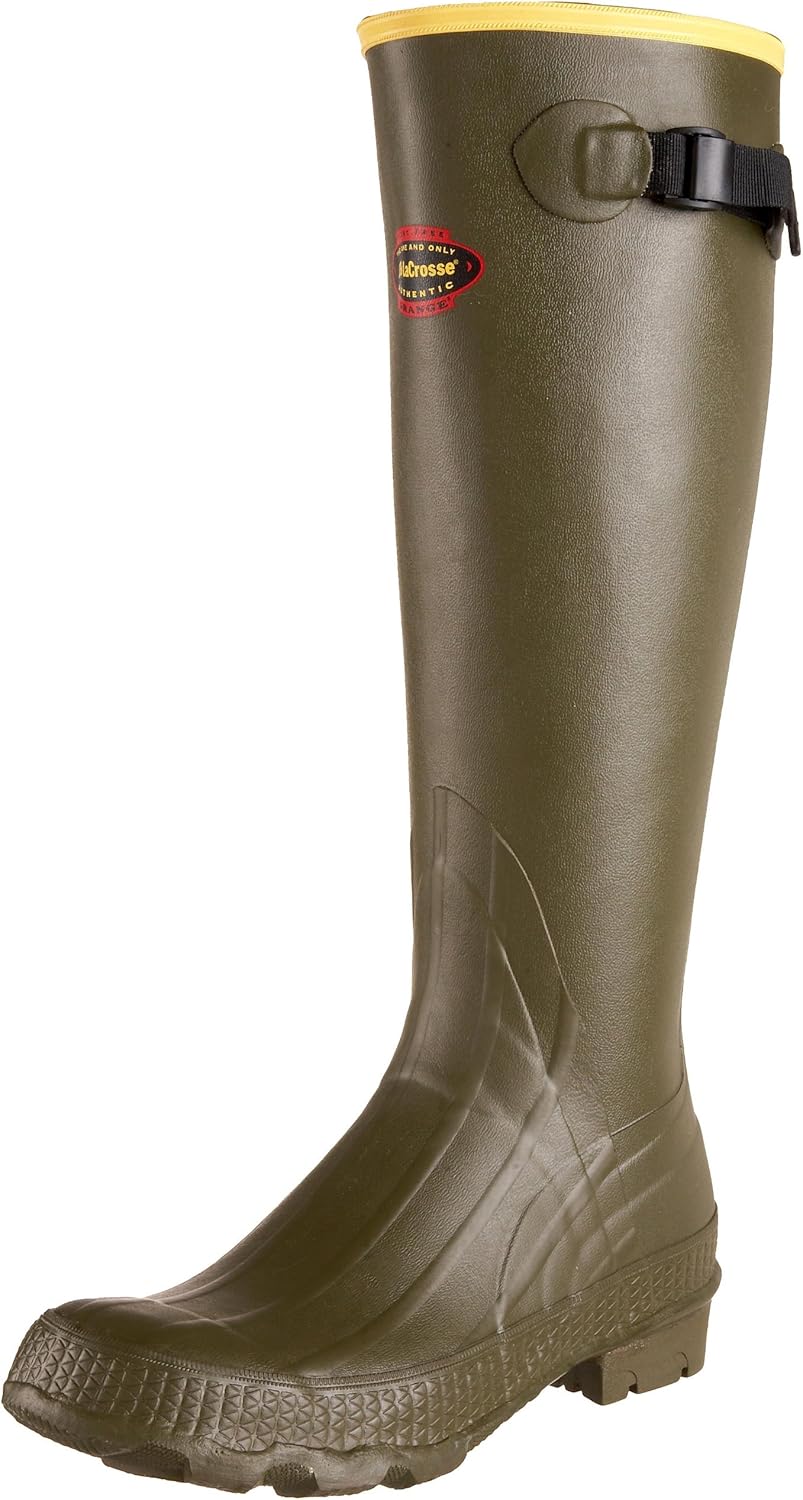
It’s tough to beat the Lacrosse Grange boots because no other companies have been able to develop an 18-inch tall boot this thin while allowing the boot to still be very durable. They’re so lightweight that you barely even notice them.

Another huge benefit of this boot is that they have an ankle-tight fit. This is important so that your heel does not slip up and down in the heel pocket (which causes blisters in other boot brands).

Additionally, they are very low profile and have a low center of gravity. This makes it hard to roll your ankle compared to other rubber boots that have taller traction. Because the traction is slim (almost non-existent) you can really feel the ground underneath your foot when hunting.

This allows you to walk much quieter in the woods because you can feel the sticks underneath your foot. For these reasons, the LaCrosse Grange boot is one of the best boots for deer trackers.

Best Budget Boot For Tracking Deer on Snow

Check Amazon's Price

Best Rubber Hunting Boots
My go-to Rubber Hunting Boot. The Lacrosse Grange rubber boots are one of the best for lots of walking and being mobile.

GumLeaf Long Lasting High-Content Rubber Boot

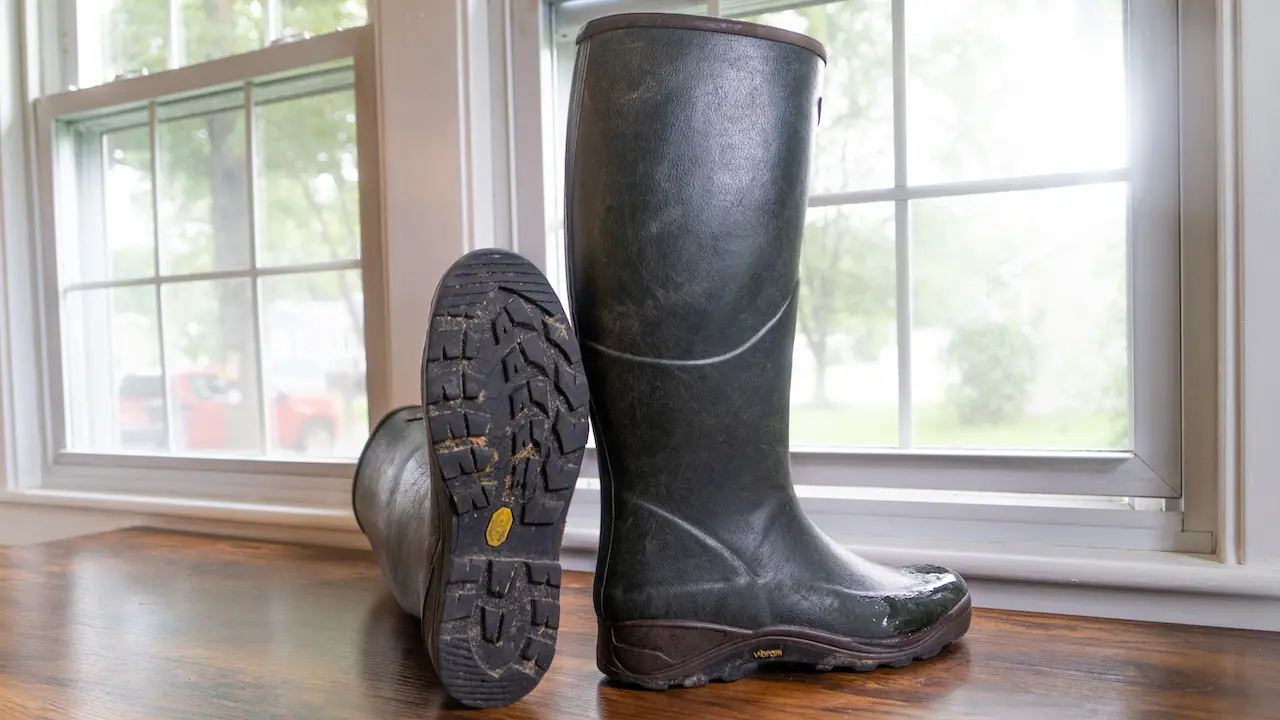
The GumLeaf Field Wellys are handcrafted boots in Europe. They are made of 85% real rubber which prevents cracking and should last around 10+ years with proper care. Most other rubber boots on the market are mixed with a higher percentage of clay and only last 1-2 years before they crack. I bought the GumLeaf Field Welly boots because I was tired of my Lacrosse boots cracking after 1-2 years.

Additionally, the Lacrosse Grange boots (which I love) do not have good traction (really no traction at all). The GumLeaf Field Wellys have soft, flexible, Vibram sole which provides much better traction and keeps your feet from getting tired as easily. The sole is soft and pliable enough to still feel the environment underfoot like the Lacrosse Grange boots.

Also, these boots are almost exactly the same height as the 18″ Lacrosse boots, so you’re not really sacrificing any height.

I’ve liked these boots so much that I reached out to GumLeaf USA to see if I could get a discount for my viewers. If you enter coupon code “JTOTen” at checkout you’ll receive 10% off these boots.

You can read my full review of these boots here: GumLeaf Field Welly Review After Months of Heavy Use

GumLeaf Field Welly Boot Review

GumLeaf Field Wellys Best Rubber Boots For Hunting with High Rubber Content

Check GumLeaf Price

Lacrosse Burly Air Grip Foam Insulated Boot

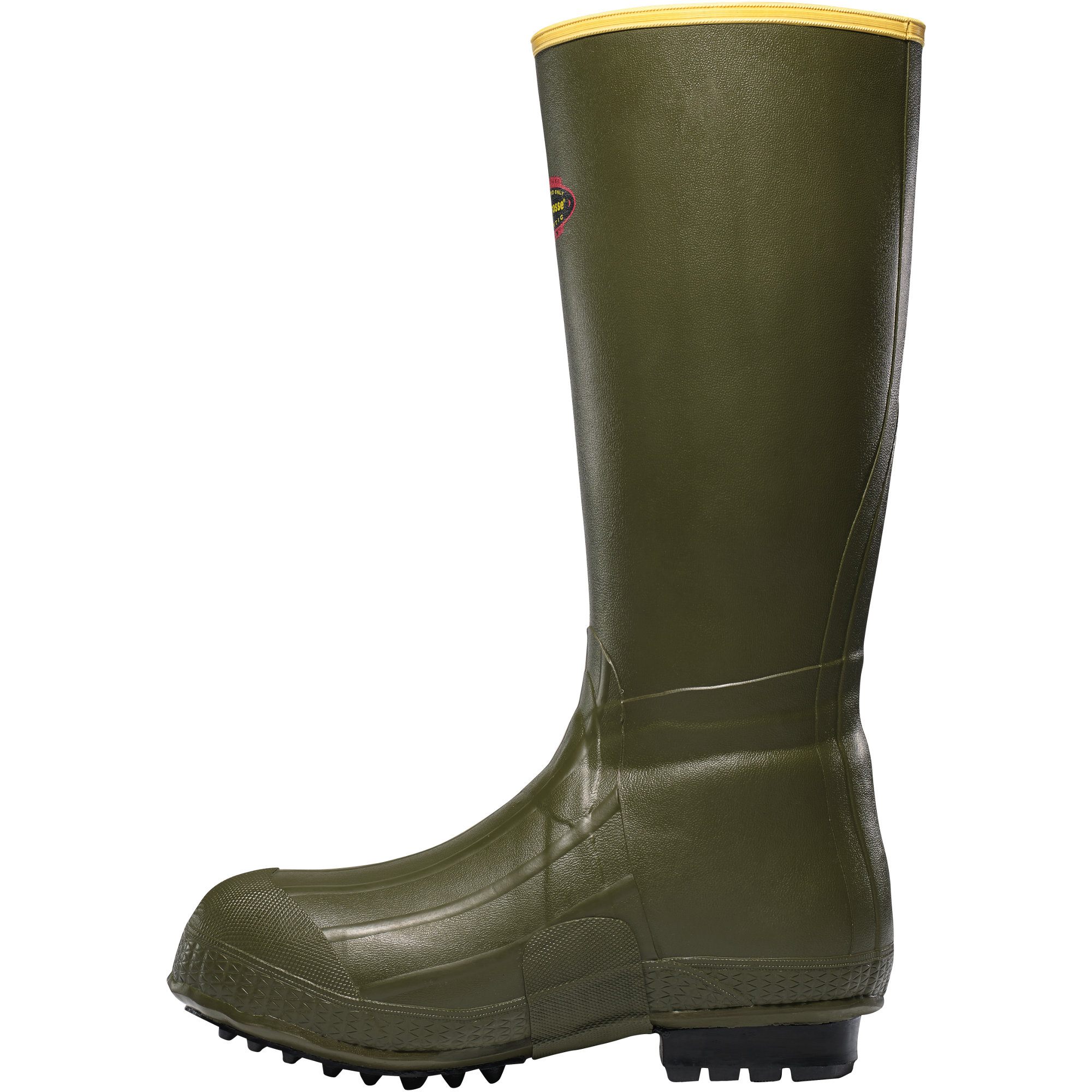
Another excellent rubber hunting boot for tracking big woods bucks on snow is the Lacrosse Burly boot with Air Grips. These boots are foam insulated and provide a little more warmth and traction than the Grange boots.

These boots are a little heavier than the Grange boots because of the added insulation and traction. However, they are great boots for hunting in slightly colder conditions and if you’re tracking deer in mountainous terrain. The Air Grip traction on the bottom of these boots will stop you from slipping as easily going uphill compared to the Grange boots.

These boots have many similar characteristics to the Grange boots. For example, great durability, a tight ankle fit, is 18 inches tall, and low profile, and you can still feel the environment underfoot quite well with the air grips.

LaCrosse Burly Air Grip Boots For Tracking Deer on Snow

Check Amazon's Price

Lacrosse Burly Air Grips Foam Insulated Rubber Hunting Boots

Lacrosse Alphaburly Pro – A Favorite Among Deer Trackers

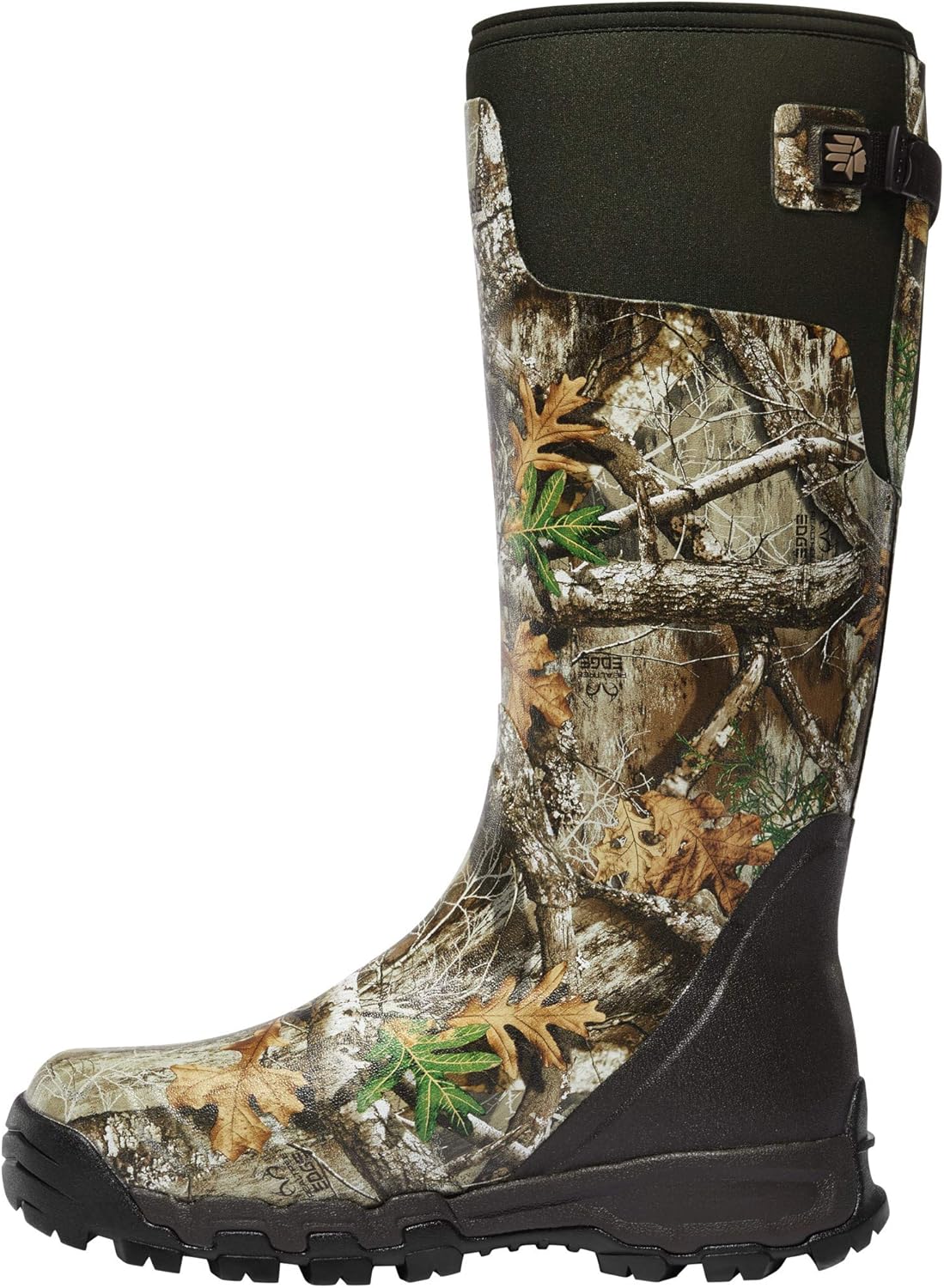
The Alphaburly Pros are Lacrosse’s top-tier rubber hunting boots. These boots have some of the best reviews of any rubber boot. They offer great traction, and comfort, and have 3 levels of insulation. So, depending on which model you buy so you can stay warm no matter the weather or temperature. The heel of these boots is also snug keeping them on your feet and preventing blisters.

They are a little heavier of a boot and would compare more closely to the Burley Air Grip boots, I would use them in similar scenarios as those boots.

Testing The LaCrosse Alphaburley Pro Rubber Boots

Lacrosse Alphaburly Pro - A Favorite Among Deer Trackers

Check Amazon's Price

Bogs Arcata Boots For Tracking Deer In Snow

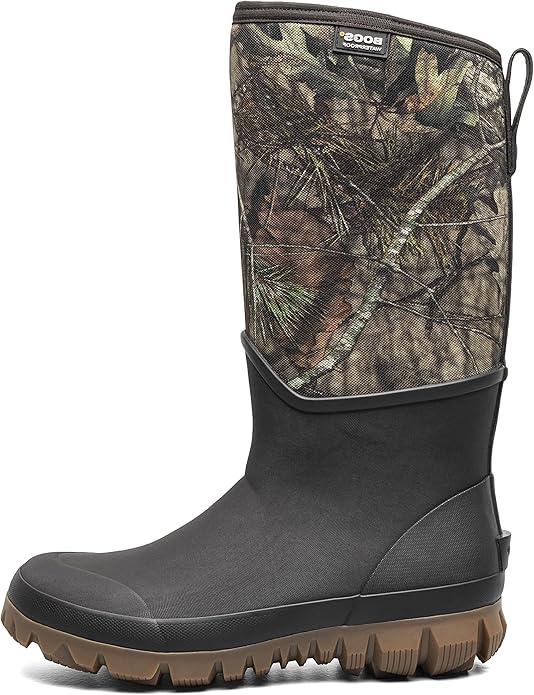
Bogs Arcata rubber boots are the most comfortable rubber boots I have ever worn. They are extremely lightweight and have excellent traction for such a low-profile/low-center-of-gravity rubber boot. I was surprised about the low center of gravity because by looking at the photos you’d think the traction is tall. However, when you wear them your foot feels very close to the ground. Because they are a low center of gravity boot you won’t roll your ankle like other rubber boots with tall traction.

The traction is excellent for walking in the snow because there are a lot of deep ridges and grooves that create a lot of surface area when stepping on snow. This creates more traction, reducing slipping.

The one thing to consider is they are around 15 inches tall (which keeps them so lightweight). In my experience, if you can cross a stream in an 18″ boot you can find a place to cross in a 15″ boot.

These are by far the lightest boots in this buying guide. For this reason, they are great for tracking deer all day while reducing foot/leg fatigue. The combination of being lightweight, comfortable, and having great traction, makes it one of the best boots for deer trackers.

Bogs Arcata Boots For Tracking Deer In Snow
Lightweight, Comfortable, and Great Traction

Check Amazon's Price

Bogs Arcata Neoprene Rubber Hunting Boots

My YouTube Video Reviewing These Boots:

Tracking Big Woods Bucks on Snow Articles:

Hopefully, you found this article on the best boots for deer trackers helpful. If you want to read more articles about tracking big woods bucks on snow, you can find them here. I cover everything from how-to’s, gear, tips & tricks…etc. A favorite is Gear for Tracking Bucks in Snow | Essentials For Big Woods Deer Hunting.

Find Me On:

CRUZR XC Review | Most Comfortable Hunting Saddle?

This Cruzr XC review looks at comfort, noise, portability, mobility, adjustability, scent control, and build quality. The CRUZR XC has a reputation for being one of the most comfortable hunting saddles on the market, if not the most comfortable. I also compared the Cruzr XC to 4 other top-selling saddles, you can find those reviews linked below:

The other 4 saddles I reviewed included:

How I Tested The CRUZR XC

I bought the CRUZR XC with my own money to test it out.

I had about one month to get to test the saddle in my backyard. In this time I found both pros and cons of the Cruzr XC. The review criteria are listed below.

CRUZR XC Review Criteria

The biggest factors I was looking for in the test included:

  • How Long I Felt Comfortable For
    • Hip-Pinch
    • Back Strain
    • Knee Fatigue
    • Comfortable Enough to Take a Nap
  • Noise
  • Portability (to and from the stand)
  • Mobility (in the stand)
  • Adjustability
  • Scent Control
  • Build Quality

CRUZR XC Saddle Review

How Long I Felt Comfortable For

Back Support

After testing all 5 saddles, it was clear that the Cruzr XC was a top contender. Out of the 5 saddles, it ranked 3 in comfort behind the JX3 Hybrid and Dryad Drey hammock.

It was an extremely comfortable saddle, the only reason the Drey beat it is that the Drey has back support. If it wasn’t for the back support, the Cruzr XC would have been ranked #2. That said, as far as conventional saddles go, the Cruzr XC is the most comfortable saddle I’ve ever used.

So, if back support isn’t important to you then the Cruzr XC would be a more comfortable choice. Also, you can add back support to the Cruzr XC but I don’t think it would be as comfortable as the built-in hammock back support.

Even Weight Distribution

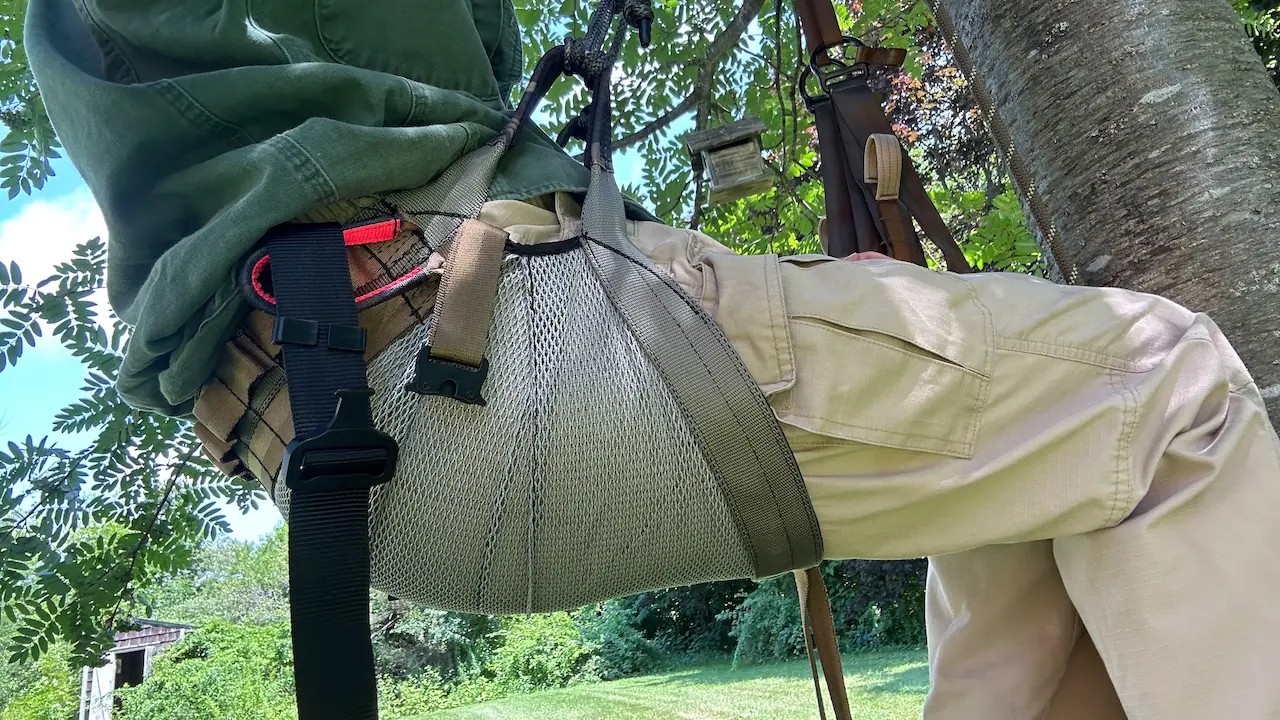
I was also happy to find out that the webbing on either side of the mesh seat does not take the brunt of your weight. Instead, your weight is evenly distributed into the mesh area of the saddle. This means that your leg circulation does not get cut off like on many other saddles. This is one of the best features of this saddle and is what allows you to use it for a long period of time without moving or getting uncomfortable.

I sat in this saddle for an hour without moving and felt completely fine to keep going. Usually, after about an hour I can feel what could be an issue for those longer 8-10 hour sits.

From what I can tell after sitting in the saddle for an hour is that an all-day sit would be comfortable. In those 8 hours, you’ll probably need to adjust but you’re not going to be fidgeting around with the saddle every 20-30 minutes trying to get it comfortable. You’ll be able to go for hours without moving.

Hip-Pinch

Hip-pinch was minimal thanks to the mesh design. The elimination of the hip pinch is a feature I was most impressed with. For a single-panel saddle to have such little hip pinch to the point where it wasn’t really noticeable is a huge win for the Cruzr XC.

Adjustable Bridge Position (Comfort Channels)

The adjustable bridge rope on the bridge loops played a vital role in the additional comfort of this saddle (see photo below).  This feature tilts your pelvis and this tilt is key. For example, if you’re saddle is tilted too far back your abs need to do a lot of work to keep you from tipping over backwards. But if you rotate forward it reduces ab strain and your muscles can relax.

Cruzr XC Bridge Loops
The bridge rope can be adjusted on the bridge loops to tilt the saddle so that it tilts your pelvis forward or backward.

Back Strain

Back strain was present because there is no back support (as with most saddles). However, I have my own back support band and I tried it with the XC and found that helped immensely to alleviate back strain. With back support, this saddle is hard to beat in comfort and is an excellent saddle for all-day hunts.

Knee fatigue was experienced in this saddle (like most saddles) and knee pads would be useful. However, because of the adjustable bridge loop, you can tilt your pelvis so that most of your weight is in the saddle and not forward into your knees against the tree. This helps take some pressure off your knees.

Single-Panel with Pleat Extensions

One of the best features of this saddle when it comes to comfort is its pleats that allow the saddle to be lengthened or shortened depending on your preferences. When you want to make the saddle smaller the pleats fold in on themselves and when you want to extend the saddle to make a bigger seat you pull the pleats apart.

I found extending the pleats was extra useful when sitting because the larger seat helped distribute my weight better and made sitting more enjoyable. This pleat system is one of the main reasons this single-panel saddle is so comfortable

Extending The Pleats of the Cruzr XC Hunting Saddle
Cruzr XC Mesh with No Hip Pinch
Adjustable Pleats

Leaning vs Sitting

Both leaning and sitting were very comfortable in the Cruzr XC I had no issues with either. The bridge adjustments (comfort channels) combined with the extending pleats make this saddle comfortable for leaners or sitters. I am a sitter and this saddle was the most comfortable single-panel saddle for sitting I’ve used by far.

Leaning in the Cruzr XC Saddle Sitting in the Cruzr XC Saddle

Noise

The Cruzr XC was a very quiet saddle and had the best comfort-to-noise ratio. Some of the more comfortable saddles like the Dryad Drey and JX3 Hybrid were more comfortable but weren’t quite as stealthy as the Cruzr XC.

There is basically nothing to make noise of the XC because it is completely fabric except for the buckles for leg and waist straps (which all saddles have).

Portability, Mobility, Adjustability

One of the best qualities of this saddle is its compactness. The minimalistic design makes it low-profile and a great option for portability and mobility because it can pack up small. Mobile hunters will really like this saddle for getting into remote places easily and quietly.

As mentioned, the saddle is very adjustable with the adjustable bridge position (comfort channels) and the pleat extensions.

The compact design combined with the simple yet effective adjustability of this saddle makes it one of the best saddles on the market.

Scent Control

Since this saddle is minimalistic it doesn’t hold a lot of scent compared to other saddles that have more fabric surface area.

The design also makes it easy to clean in a tub of scent-free detergent and won’t take long to dry.

Build Quality

I was impressed with the overall build quality of the Cruzr XC. The straps are strong and secure and the stitching is excellent. I only used the XC for about 30 days so I haven’t used it through an entire season but I have a good feeling it will last for many years based on the quality of the stitching and fabric.

Final Thoughts

The Cruzr XC is one of my favorite saddles at the time of this review. In my experience, there is not a more comfortable conventional saddle on the market (double-panel or single-panel).

It’s minimalistic, lightweight, comfortable, and easy to use, making it an excellent option for mobile hunters that are looking for more comfort.

Hopefully, this Cruzr XC review was helped you decide if the Cruzr XC is right for you. If you’re looking for even more comfort, the JX3 Hybrid and Dryad Drey Hybrid are fantastic as well. I’ve reviewed these saddles too, you can find those reviews below:

Tethrd ESS Saddle Review (Hands-on) | Comfort, Noise,…

This Tethrd ESS saddle review is 1 of 5 saddles I bought to determine which saddle is the best for hunting. The criteria I used to rank this saddle (and the others) were comfort, noise, portability, mobility, adjustability, and scent control.

The other 4 saddles I reviewed included:

How I Tested The Tethrd ESS

I bought the Tethrd ESS with my own money to test out.

I had about one month to get to test the saddle in my backyard. In this time I found both pros and cons of the Tethrd ESS. The review criteria are listed below.

Tethrd ESS Review Criteria

The biggest factors I was looking for in the test included:

  • How Long I Felt Comfortable For
    • Hip-Pinch
    • Back Strain
    • Knee Fatigue
    • Comfortable Enough to Take a Nap
  • Noise
  • Portability (to and from the stand)
  • Mobility (in the stand)
  • Adjustability
  • Scent Control
  • Build Quality

Tethrd ESS Saddle Review

How Long I Felt Comfortable For

After testing all 5 saddles, it was clear that the Tethrd ESS was not a very comfortable saddle. Out of the 5 saddles, I ranked it #4 in comfort.

I was comfortable for maybe 45 minutes before the soreness and pinching started to become noticeable.

After researching different ways to use this saddle and trying them all I couldn’t get the saddle to be comfortable. I figured the two-panel system would allow for better comfort but after testing it wasn’t as good as I expected.

Hip-pinch, back strain, and knee fatigue were experienced in this saddle and it was not comfortable enough to take a nap in, even with back support.

Double-Panels

Moving the double panels helped slightly to increase comfort because when I got sore spots I could adjust their locations. However, I had to do it often so I was moving around a lot.

Although the straps are large and are weight-bearing I found that they did not work as well as the mesh on the Cruzer XC for distributing weight. The ESS straps were cutting off blood flow in my legs and hips. I opened the bridge up a lot to reduce the hip pinch and it helped a little.

When I tried moving one set of panels to support my lower back, it was much too tight and was choking my kidneys so that was basically a non-option.

I think comfort channels on the bridge would help people at least rotate their pelvis in a way that would increase comfort and reduce stress to a degree.

For these reasons, there was a lot of fiddle factor when trying to get comfortable and stay comfortable.

Leaning vs Sitting

Leaning in this saddle was probably the most comfortable. When it came to sitting, which I like the most, I had too much pressure on my legs and hips. There was no way to position the panels to make them comfortable for long-term sitting.

After wearing the ESS for a while I decided to put the XC back on to see if I was just getting fatigued or if the XC was actually more comfortable. It was clear that I was able to feel immediate relief once I put the Cruzr XC on.

Tethrd ESS Leaning Position
Leaning in the ESS was the most comfortable
Tethrd ESS Sitting Position
Lots of hip pinch when sitting in the ESS

Noise

The bridge loops are two big metal d-rings that help bring your hips to an equilibrium/level when shooting at angles. However, they are located in front of you so they bump into things like climbing sticks and buckles when moving and they are noisy.

Although the metal d-rings are an interesting concept, I think they should be replaced with a fabric bridge that has comfort channels. It may help both comfort and noise to a degree.

Tethrd ESS Metal Bridge D-Rings

Portability, Mobility, Adjustability

One of the best qualities of this saddle is that it is made using just a few seatbelt-sized straps. The minimalistic design makes it low-profile and a great option for portability and mobility because it can pack up small.

There is adjustability with the bridge length and the double-panel system, but as I mentioned comfort was not ideal even with these adjustments.

Tethrd ESS Saddle Review - hands on

Scent Control

Since this saddle is minimalistic it doesn’t hold a lot of scent compared to other saddles that have more fabric surface area.

The design also makes it easy to clean in a tub of scent-free detergent and won’t take long to dry.

Build Quality

I was impressed with the overall build quality of the Tethrd ESS. The straps are strong and secure and the stitching is excellent. Granted, I only used the ESS for about 30 days so I haven’t used it through a whole season but I get the feeling that this saddle would last a long time.

Final Thoughts

Although the Tethrd ESS is not the most comfortable saddle, the minimalistic design is something to consider if you’re looking for something very easy to pack in and out if you’re willing to sacrifice comfort.

Though, if I’m being honest, in my opinion, there are other saddles I have reviewed (linked below) that are just about as minimalistic and are more comfortable.

Hopefully, you found this Tethrd ESS saddle review helpful. If you’re interested in reviews of the other saddles, you can find them here:

Maven RF.1 Review | Maven’s Best Hunting Rangefinder

This hands-on Maven RF.1 review dives into Maven’s best rangefinder to determine if it is worth the money. Build quality, price, glass quality, display, illumination, weight, battery life, ease of use, button layout, range… and more were examined.

This post contains Amazon and other affiliate links, which means I’ll receive a commission if you purchase through my link, at no extra cost to you. Of course, you are not obligated to use my links, but it does help fund these posts in hopes of bringing more value to you!

Maven RF.1 Review – What I Liked

Direct-to Consumer Pricing

Maven sells their products direct to the consumer, which allows them to bypass the retail model of selling products which makes products more expensive.

Since Maven sells directly to the consumer there is no price mark-up, allowing them to sell you better optics at lower prices.

Durability and Rubberized Grip

The Maven RF.1 feels great in the hand. It’s lightweight (10 oz) yet feels very durable due to the rubberized coatings on top of the magnesium/aluminum frame material that makes it feel like it can handle the shock if accidentally dropped. The rubber coatings also provide an excellent grip.

Maven RF.1 Rubberized Grip

Toggling Menu Options and Settings

The dial on the side of the Maven RF.1 makes toggling menu options and settings a breeze and is something I really like about this rangefinder. However, there are some cons to this dial which we will cover below.

Maven RF.1 Dial and Menu Toggle
Maven RF.1 Review: Dial and Menu Toggle

Eye Focus Ring / Diopter Adjustments / Glass Quality

There is an adjustable focus ring so that you can dial this rangefinder to your eye perfectly so you can see clearly.

For even better viewing there’s an adjustable diopter. This helps keep the rangefinder at the perfect distance from your eye. Hunters with glasses will especially like this feature.

These features with the excellent glass quality make the RF.1 very crisp and clear. Compared to my old, cheap, rangefinder, there is a big difference in optic quality, making it easier to find your target.

Maven RF.1 Eye Focus Ring and Diopter Adjustments

Battery and Battery Life

The battery is also easily accessible and is a tool-less design so it’s easily replaced. This rangefinder’s battery will last >3500 range cycles, which is what you would expect in a quality rangefinder.

Tripod Mounting Threads

Tripod threads are very handy for long-distance shooters because having a stable platform to ensure you’re ranging accurately at those long distances is key. The threads are found on the bottom of the rangefinder for easy mounting.

Maven RF.1 Tripod Attachment Threads

Reticle Brightness Dial

There is a brightness dial to adjust brightness depending on your situation. This is essential for both low-light and bright hunting situations to ensure you can get an accurate read on your target no matter the conditions.

Forest (FOR) Mode vs Field Mode (FLD)

This rangefinder has two modes Forest (FOR) Mode and Field Mode (FLD). To increase ranging accuracy this rangefinder will change the way it measures distances depending on which setting you choose.

FLD

When set to FLD mode it will range the closest object. You would want this in a field so you don’t end up ranging something further in the background behind the target.

FOR

When set to FOR mode it will range the furthest target when holding down the button. You’d want this feature if there were obstacles in the way of your target, like the brush in a forest setting. This way you can be sure you’re ranging the target and not the brush in front of the target.

Angle Compensation

The Maven RF.1 does have angle compensation which is important for having the most accuracy when bowhunting and rifle hunting at closer ranges (within ~400 yards).

Line of Sight (LOS)

The RF.1 also has a line of sight mode which is great for longer shots ~400 yards+ where a more precise/manual calculation is needed for the most accurate shots with a firearm.

Change Reticle

Another cool feature of this rangefinder is that you can change the reticle. This is helpful for ranging at different distances. For example, you can choose a more precise reticle for longer ranging applications and vice versa.

Yards and Meters Toggle

The ability to toggle between yards and meters is a great feature because people use different metrics for shooting. The ability to toggle between both makes is a more usable rangefinder to a wider variety of hunters and shooters.

Max Ranges of the Maven RF.1

  • The RF.1 max reflective range is 4500 yards.
  • The RF.1 can range trees out to 3000 yards.
  • The RF.1 can range deer out to 2700 yards.

This rangefinder is by far the best at ranging at long distances when compared to other top rangefinders on the market, especially for the price.

For example, in my article about the top rangefinders, you will see that the next runner-up for distance is the Sig Sauer KILO5K which can range deer at 2000 yards, and it costs almost 200$ more than the Maven RF.1.

Maven RF.1 Rangefinder

Check Maven's Price

Maven RF.1 – Things to Consider

Usability

Overall, the usability of this rangefinder is great but I had a few considerations to note. First, the one-handed operation of the brightness and ranging buttons at the same time is tricky.

I felt like I needed to use both hands when I wanted to change the brightness of the reticle. This is not an issue unless you forgot that your brightness is maxed out and then try to range an animal at the first minutes of legal shooting time…it will blind you.

I found myself needing to use both hands to turn the brightness down because my thumb is not able to move the brightness knob very well with one-handed operation.

Left Handed vs Right Handed Use

Additionally, to my knowledge, there is no left-handed version of this rangefinder which means it will definitely be a two-handed operation if you’re trying to make any brightness changes when trying to range.

Knob Bulk

Additionally, keep in mind that the small knob on the rangefinder does stick out a bit and it can get caught on things. However, the knob is pretty slick for making brightness changes and toggling the menu system, so there is a trade-off there.

Maven RF.1 Final Thoughts

For the price, the Maven RF.1 is hard to beat. It has impressive specs compared to other top rangefinders on the market that have much higher price points, making it a great value.

If you’re in the market for a new rangefinder you can’t go wrong with the Maven RF.1.

Maven RF.1 Owners Manual

Hopefully, you found this Maven RF.1 review helpful. If you’re looking for more information on the Maven RF.1 rangefinder you can download the manual here. You can also find more information about this rangefinder on Maven’s website.

Find Me On: